
SLS 3D printing in PA12 nylon and its real-world uses
Published:
SLS printing uses a laser to sinter fine nylon powder into strong functional parts. It needs no supports, so it handles complex shapes, moving assemblies and dozens of parts in a single build. We explain how it works, which materials we print with and when it pays off.
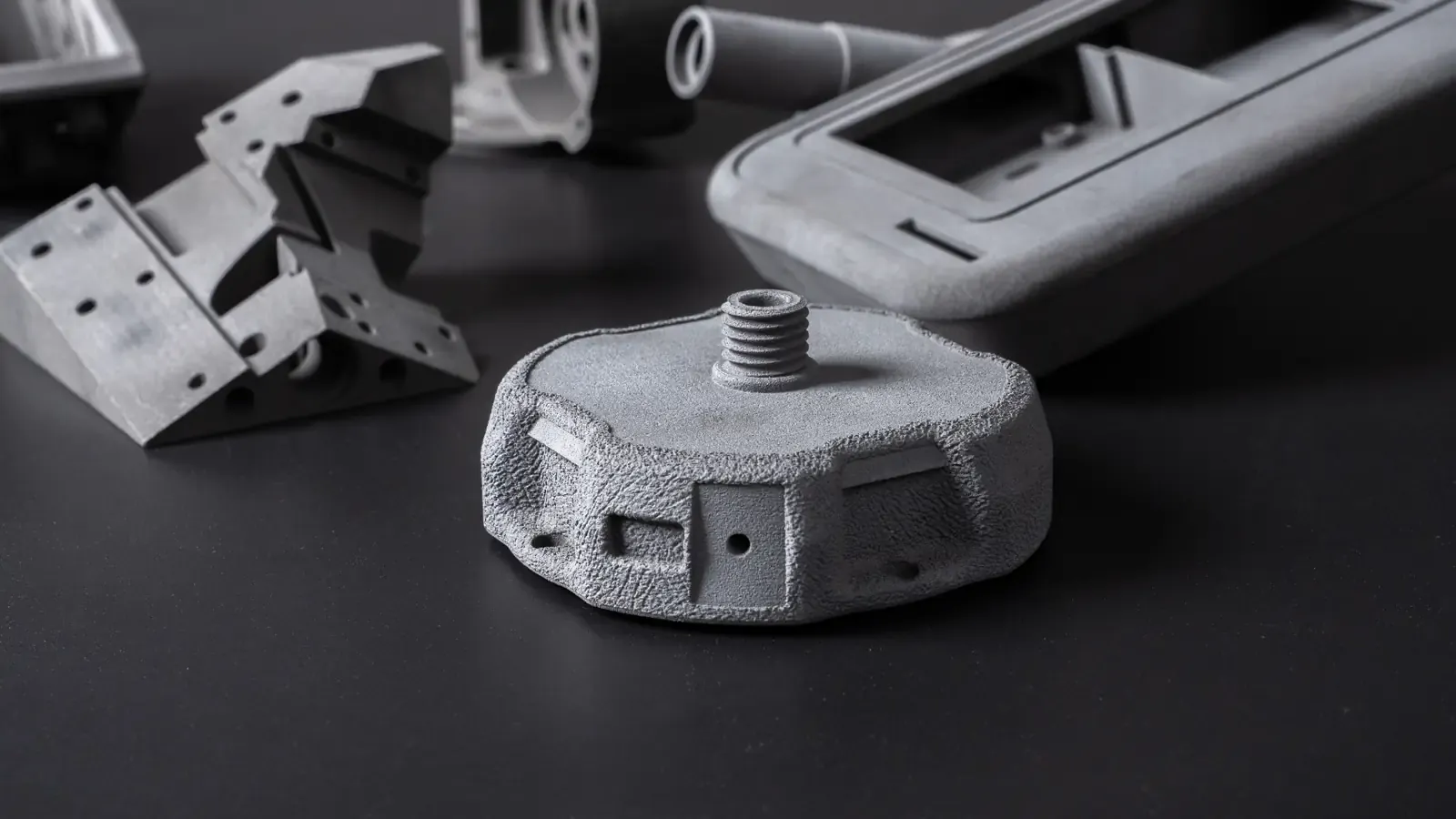
Selective laser sintering (SLS) is the technology we use at eRobots for 3D printing functional plastic parts and small batches. We print on our own Formlabs Fuse 1+ printer in PA12 nylon and flexible TPU.
SLS parts are strong, dimensionally stable and easy to finish further. We dye them, install threaded inserts or assemble them into a finished product.
How SLS 3D printing works
The printer spreads a thin 0.11 mm layer of powder over the build area and preheats it just below its melting point. The laser then fuses the powder where the cross-section of the part lies. The build area drops by one layer, new powder is spread and the process repeats until all parts in the chamber are finished.
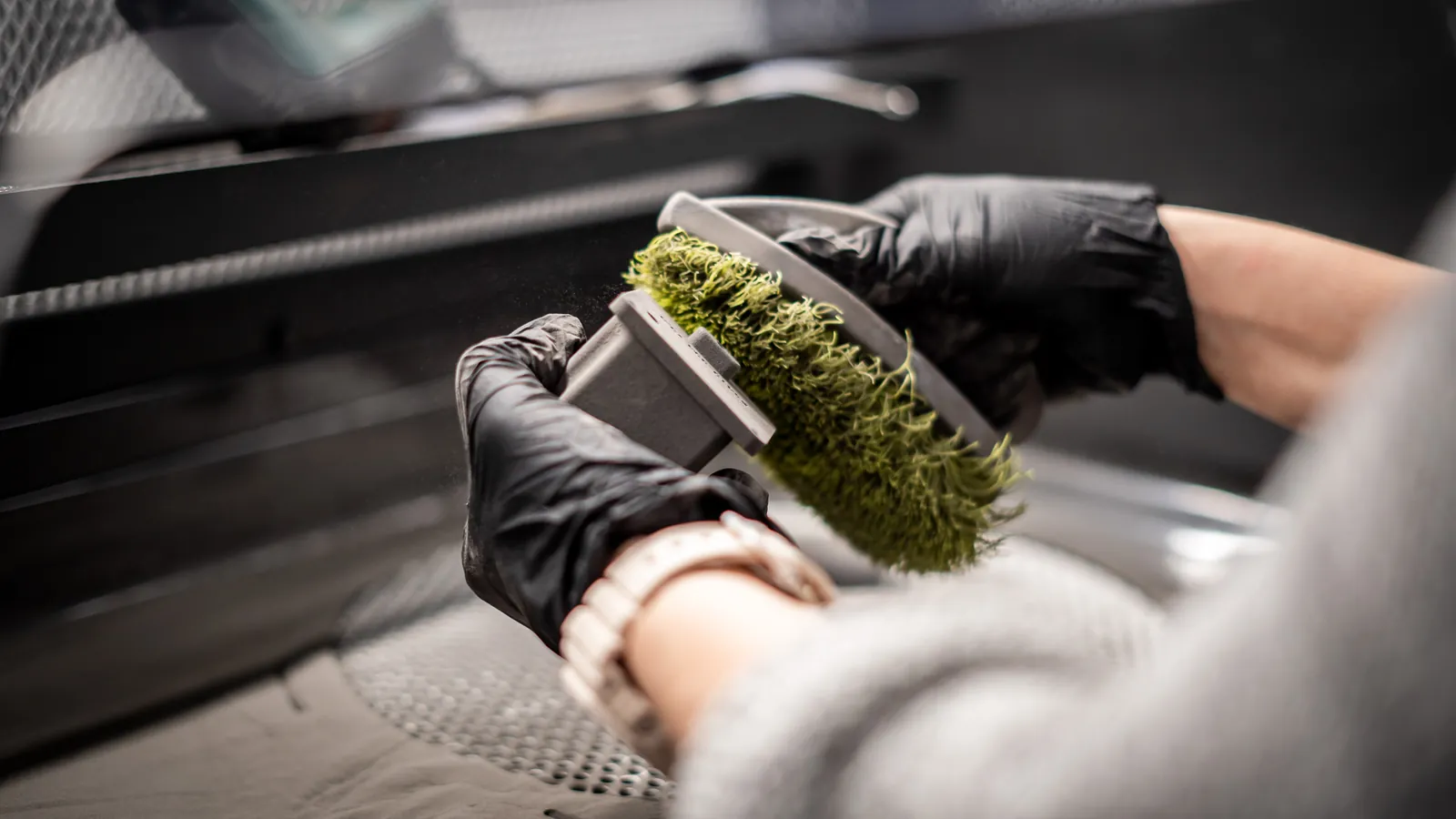
The loose powder around the parts is removed after printing and most of it is reused. Waste is therefore minimal.
How we make an SLS part at eRobots
- We check the 3D model and arrange the parts in the chamber to use its full volume.
- We print the whole chamber at once.
- The chamber cools down slowly so that the parts do not warp.
- We take the parts out of the powder and clean them.
- Depending on the order, dyeing, painting, insert installation or assembly follows.
- We check every part before shipping and pack it safely.
SLS vs MJF
MJF (Multi Jet Fusion) by HP also works with PA12 powder. Instead of a laser, it applies a fusing agent with a print head similar to an inkjet printer and heats the layer with an infrared lamp.
The resulting parts have similar mechanical properties. MJF is used mainly for large production runs and its parts are grey by default. For prototypes and batches of tens to hundreds of pieces, SLS delivers the same value.
Why SLS needs no supports
The unsintered powder around the part holds it in place during printing. No support structures are needed, so there is nothing to remove afterwards and no marks on the surface. This brings three practical benefits:
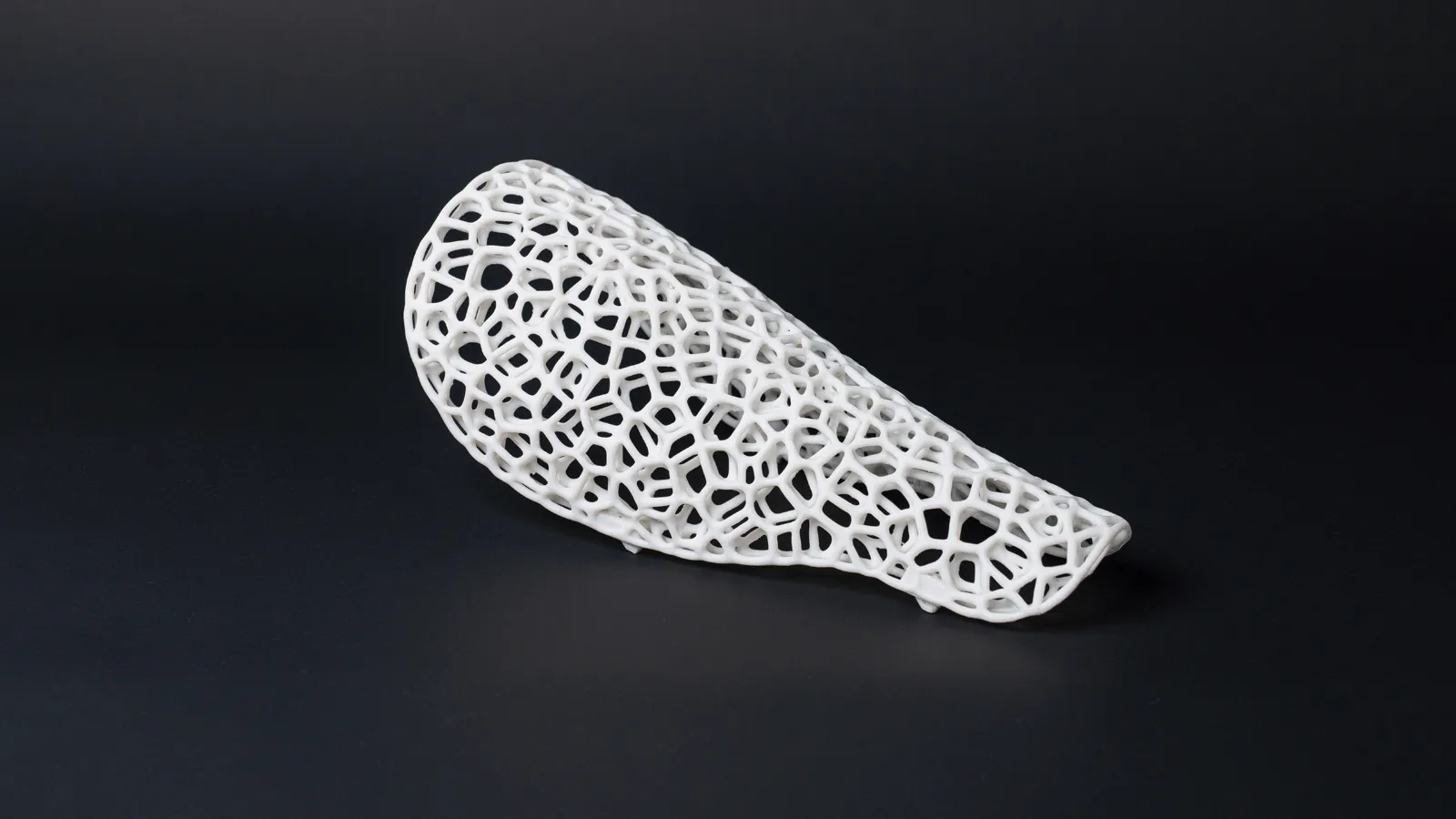
- Complex shapes without changing the model. Internal channels, overhangs and lattices print exactly as you design them.
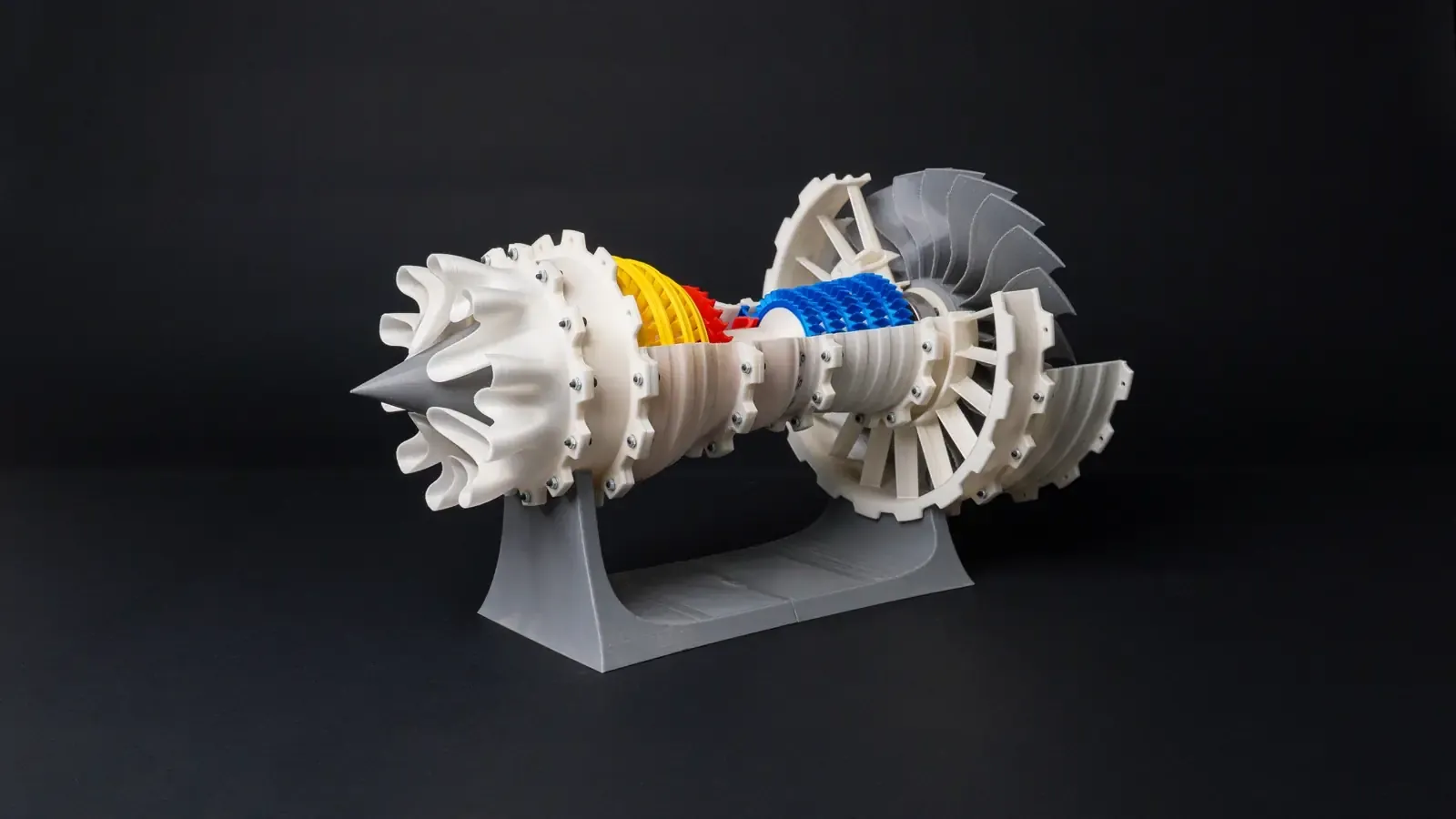
- Moving assemblies in one piece. Joints, hinges or chains come out finished, with no assembly. You only need to leave clearance between the moving parts in the model.
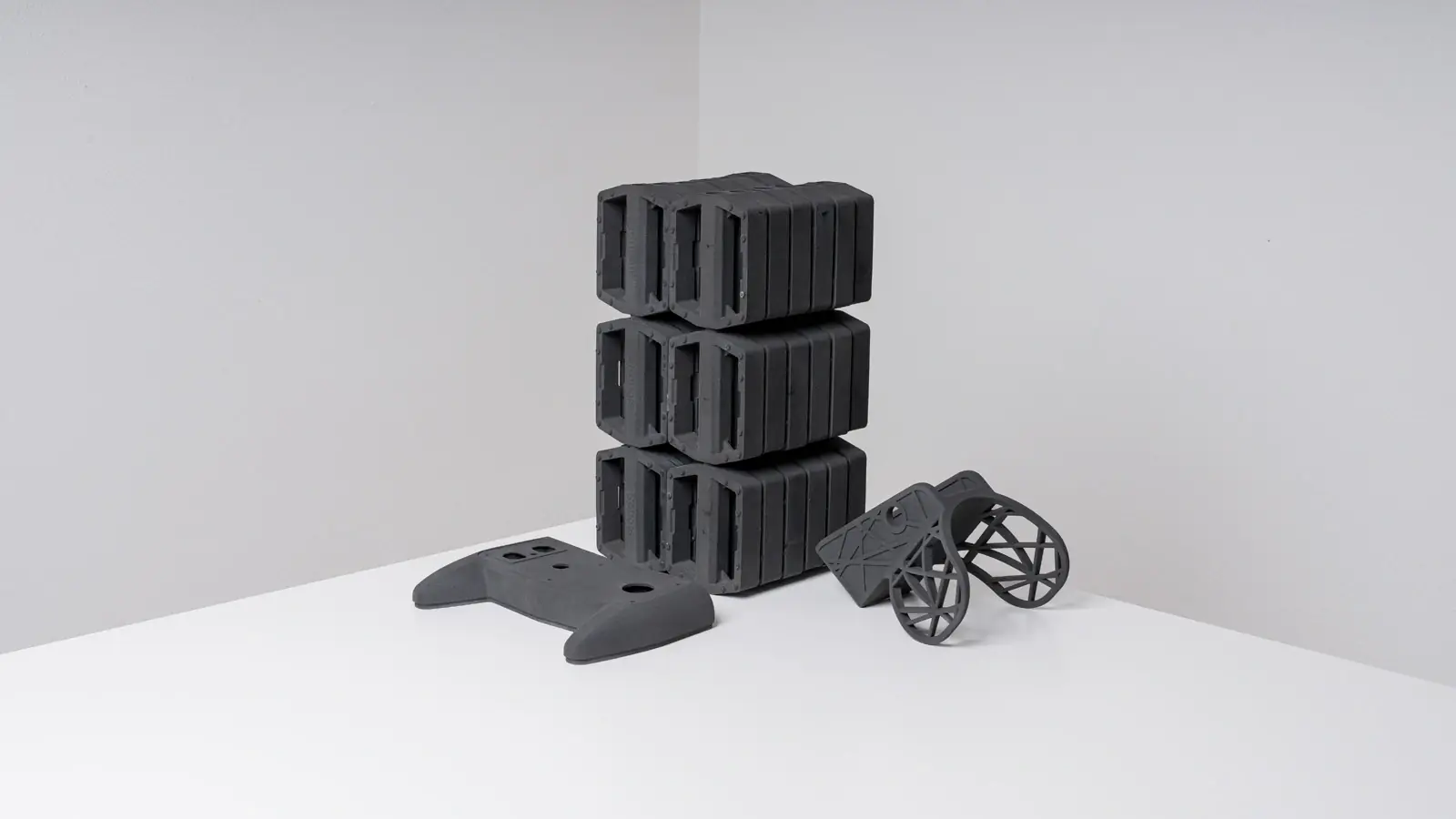
- Full use of the chamber. Parts can be stacked throughout the whole volume, so dozens of small pieces print at once.
There is one limit. A fully closed hollow space, such as a hollow sphere, cannot be printed because the powder cannot be removed from it. Design openings into the cavity so the powder can be emptied out.
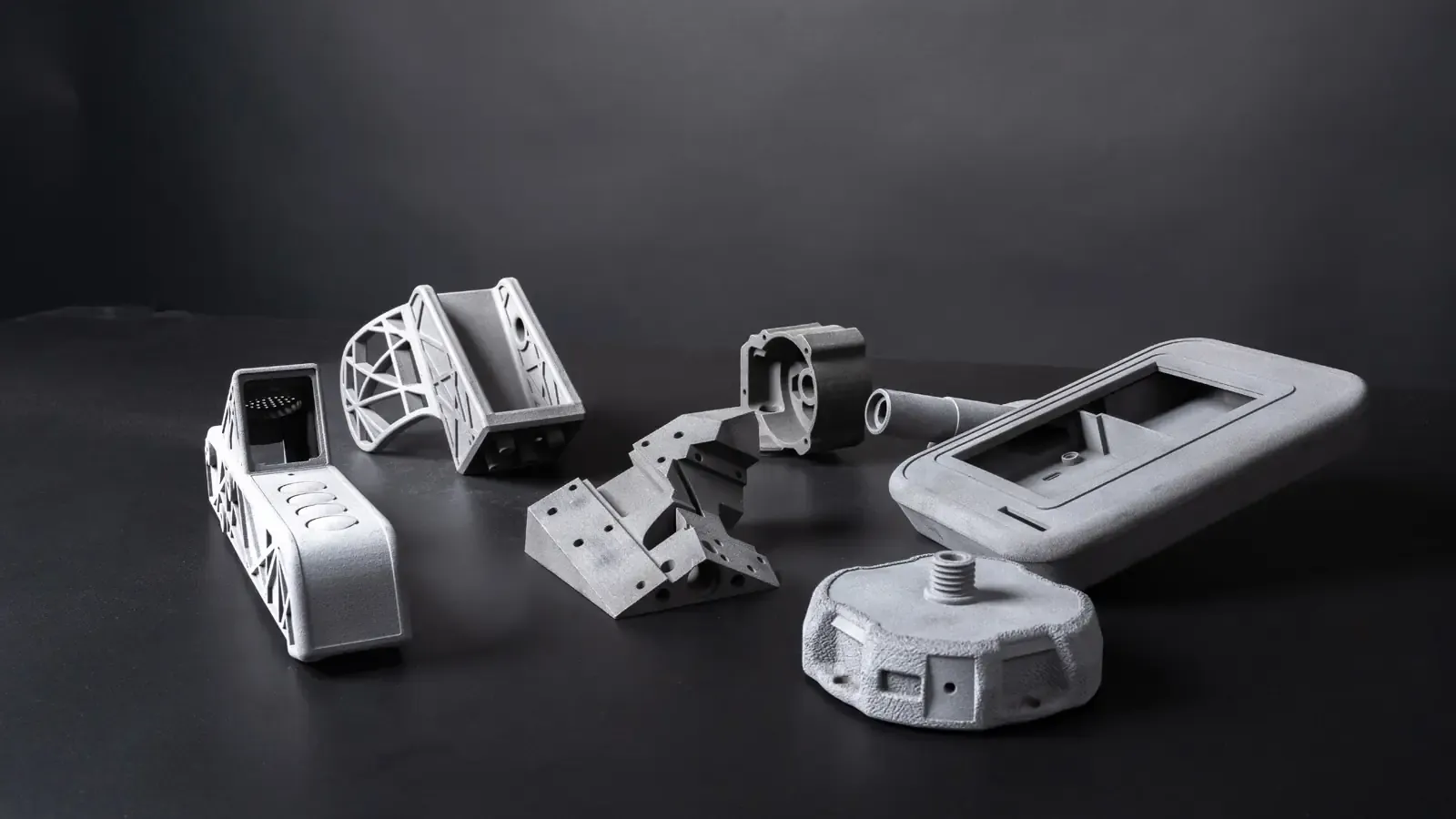
SLS printing specs at eRobots
| Parameter | Value |
|---|---|
| Printer | Formlabs Fuse 1+ |
| Maximum part size | 160 × 160 × 295 mm |
| Layer height | 0.11 mm |
| Minimum wall thickness | 1 mm |
| Surface | finely grained, matte |
| Materials | PA12 nylon, TPU |
We can split a larger part into sections and join them, or use FDM printing with sizes up to 1,200 mm.
Materials for SLS printing
PA12 nylon
PA12 is the most widely used SLS material. It is strong and tough, resists oils, fuel and most chemicals and copes with outdoor use. It suits electronics housings, sensor holders, clips, production jigs and end-use parts.
Its natural colour is grey. Most often we dye it black, and the surface can also be sanded and painted.
| PA12 property | Value |
|---|---|
| Tensile strength | 46-51 MPa |
| Tensile modulus | 1,600-1,850 MPa |
| Elongation at break | 18-25 % |
| Flexural strength | 46-58 MPa |
| Heat deflection temperature (HDT) at 0.45 MPa | 140-147 °C |
| Heat deflection temperature (HDT) at 1.8 MPa | 82-86 °C |
The values come from the PA12 data sheet. A real part may differ depending on orientation and geometry.
TPU
TPU is a flexible elastomer for seals, dampers, soft grips and parts that must bend and return to their original shape. It resists abrasion and impact but copes less well with high temperatures.
You will find details on both materials in the article on powder materials for SLS.
Surface and dyeing
An SLS part has a finely grained matte surface, similar to fine sandblasting. It feels pleasant to the touch and hides small irregularities well. For a different look we offer surface finishes:
- Dyeing. We immerse the part in a solution and the colour penetrates the surface layer. It does not peel off and does not change the part's dimensions. We dye in black.
- Painting to RAL. More than 55 shades in stock or any RAL shade on request, matte or glossy. Paint can affect precise mating surfaces.
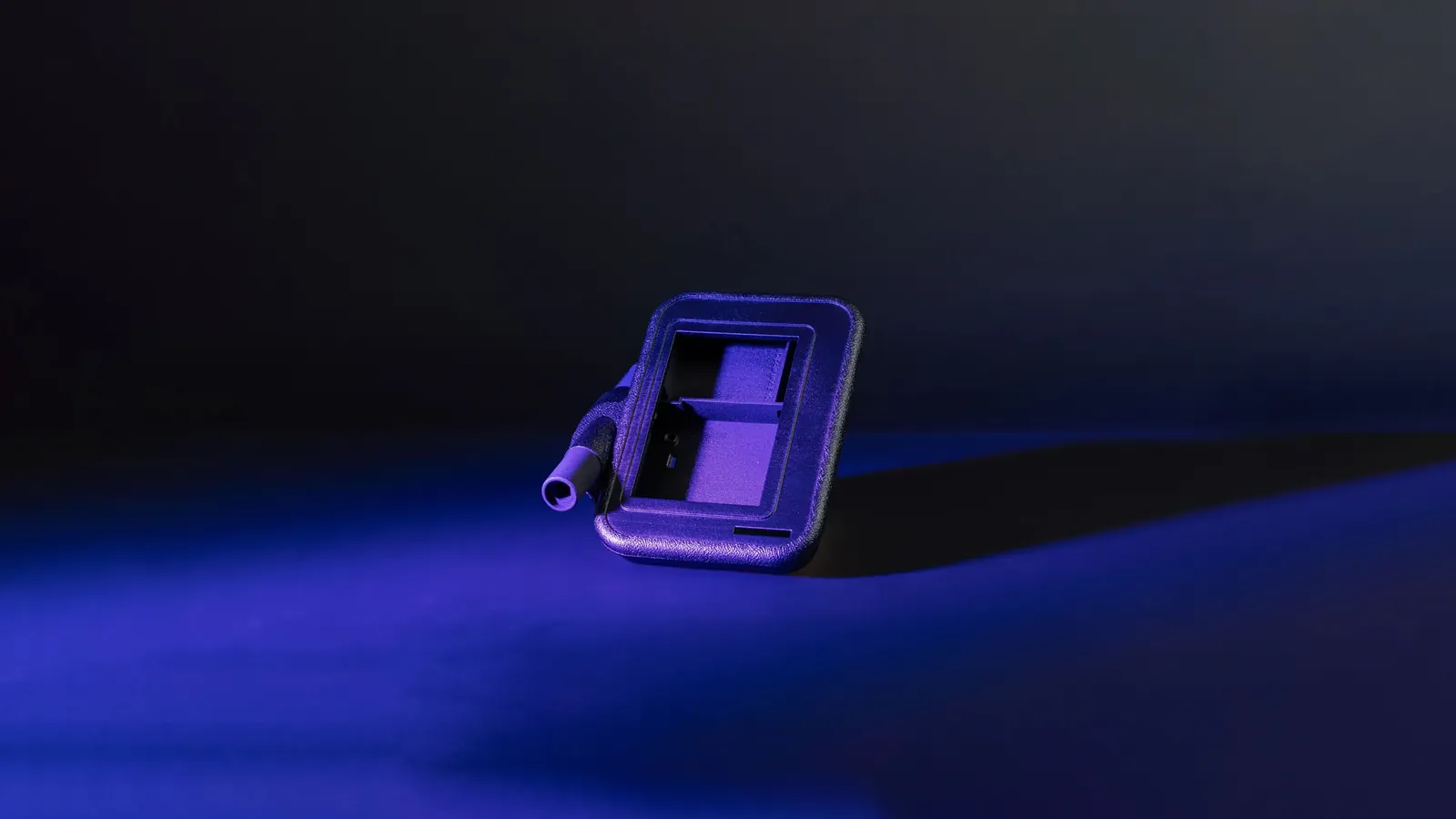
- Texturing. A dotted, square or geometric pattern, or a non-slip surface, designed directly in the 3D model. The texture is created during printing, even on selected faces only.
Small batch production with SLS
SLS pays off most when you need tens to hundreds of parts. The chamber is filled in one go and no mould is needed as with injection moulding. One build can hold identical parts or completely different ones.
An SLS part often does not end with printing. We install threaded inserts so it can be screwed together repeatedly. If needed, we assemble the part with electronics into a finished product and deliver it in regular batches.
When to choose SLS and when another technology
| You need | Recommended technology |
|---|---|
| A strong functional part or a batch of small parts | SLS |
| A flexible part, seal or damper | SLS in TPU |
| A large, low-cost part over 300 mm | FDM |
| A smooth surface, fine details or a transparent part | SLA |
| A metal part | SLM |
We compare all four technologies in the article 3D printing technologies compared.
Real-world examples
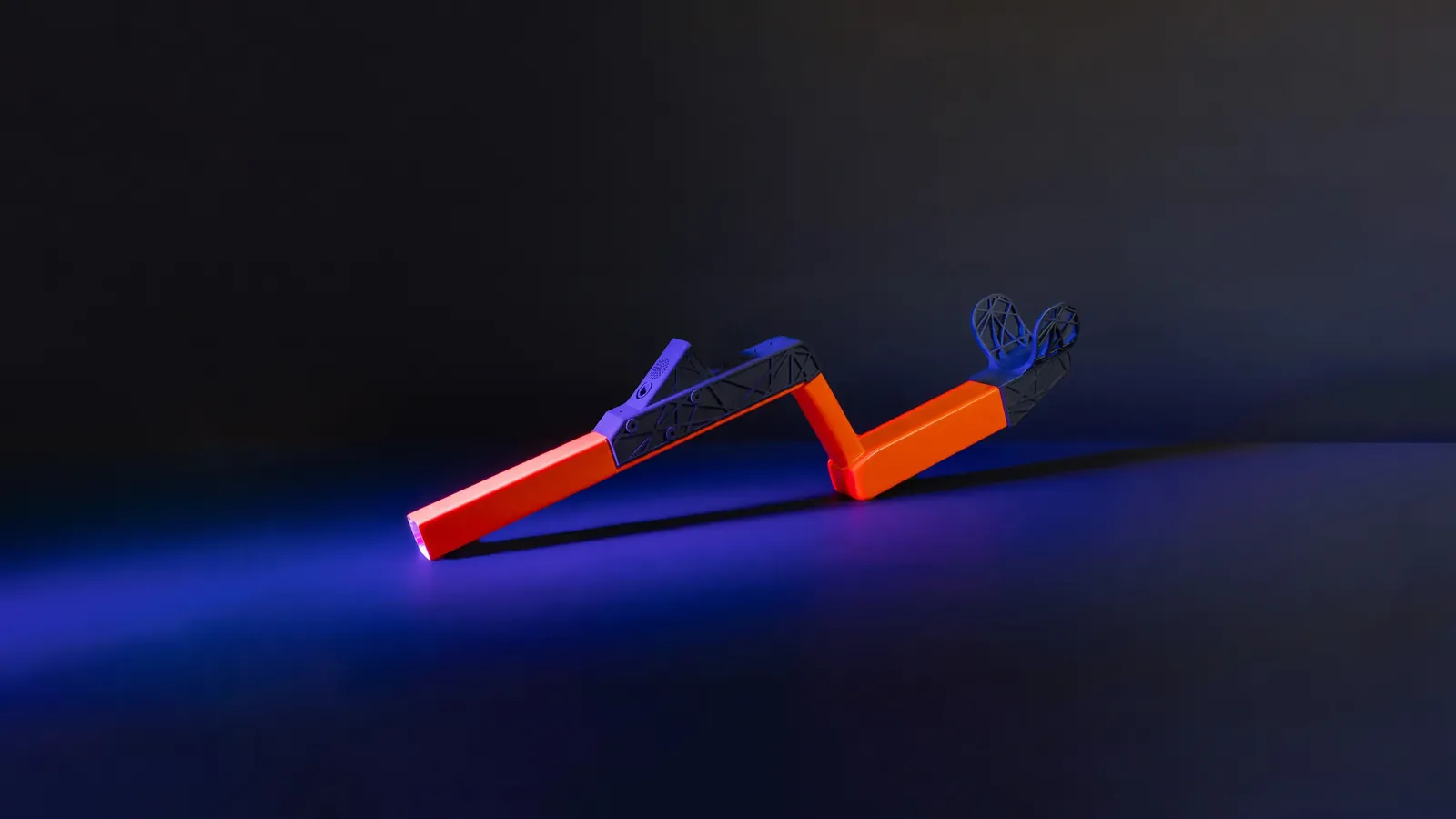
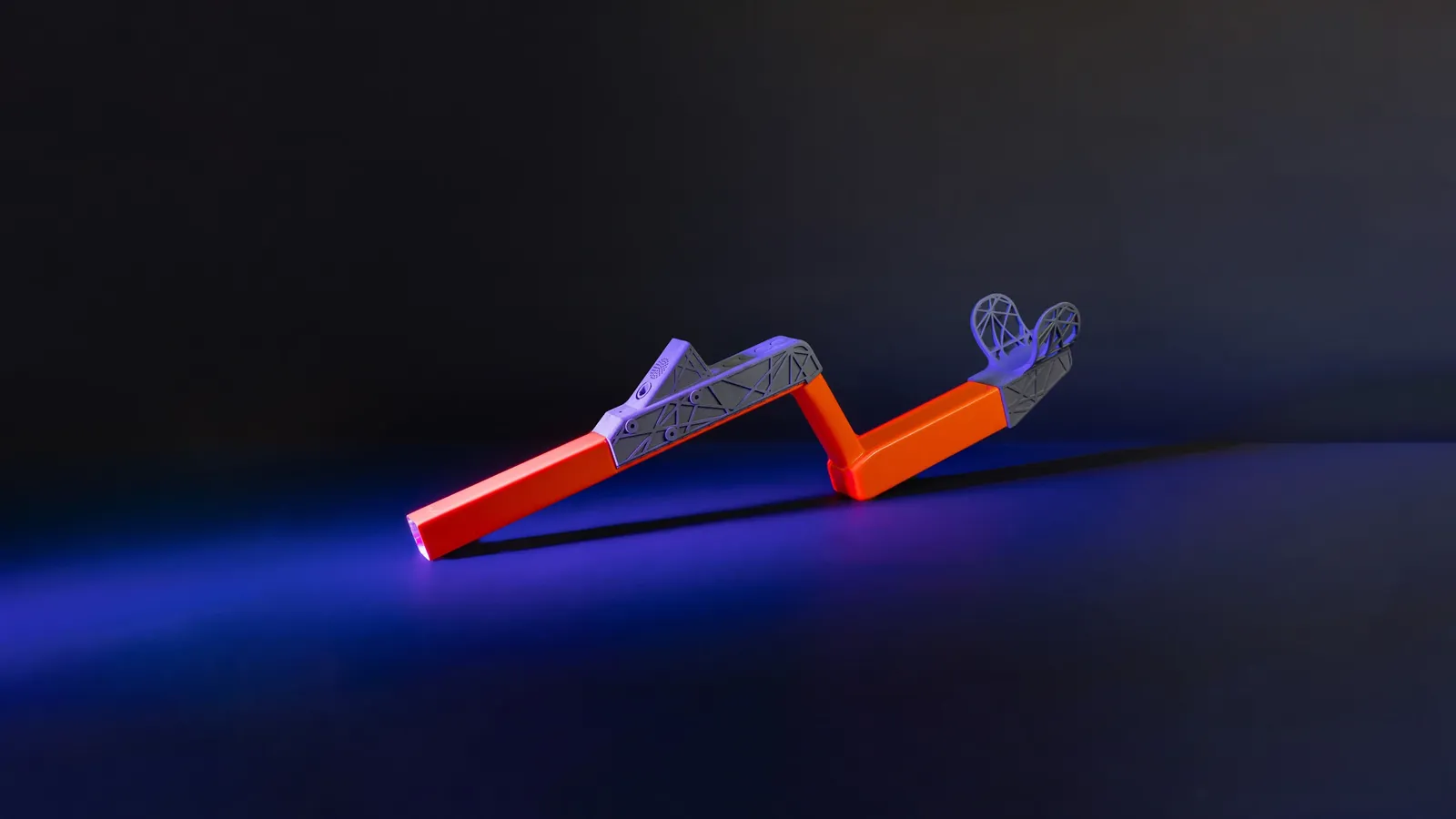
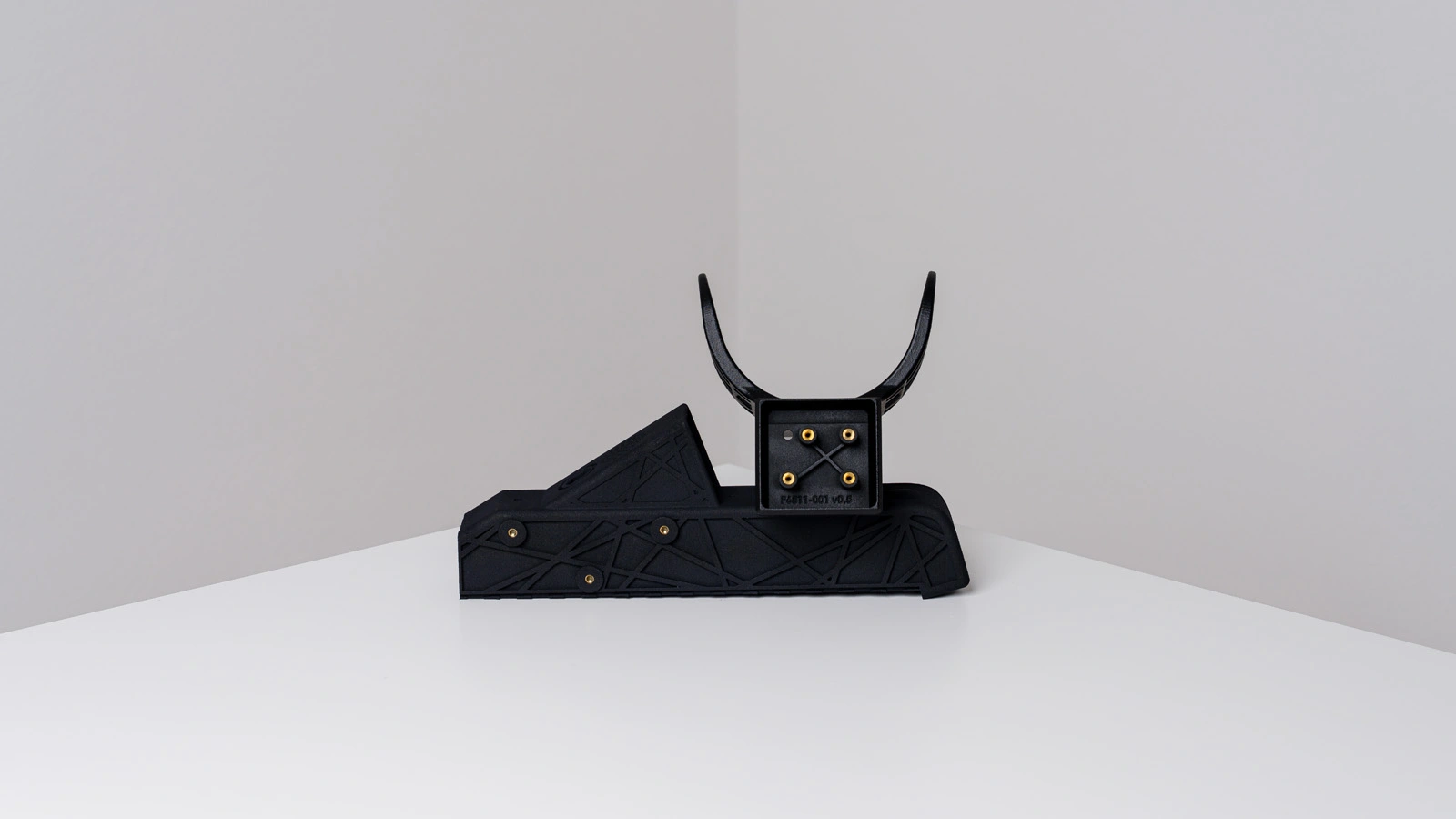
Part for a roof leak detection device
We produce the base of this part with SLS in regular small batches. After printing we dye it black and install threaded inserts. The customer receives a finished component ready to be mounted into a device that finds leaks on flat roofs.
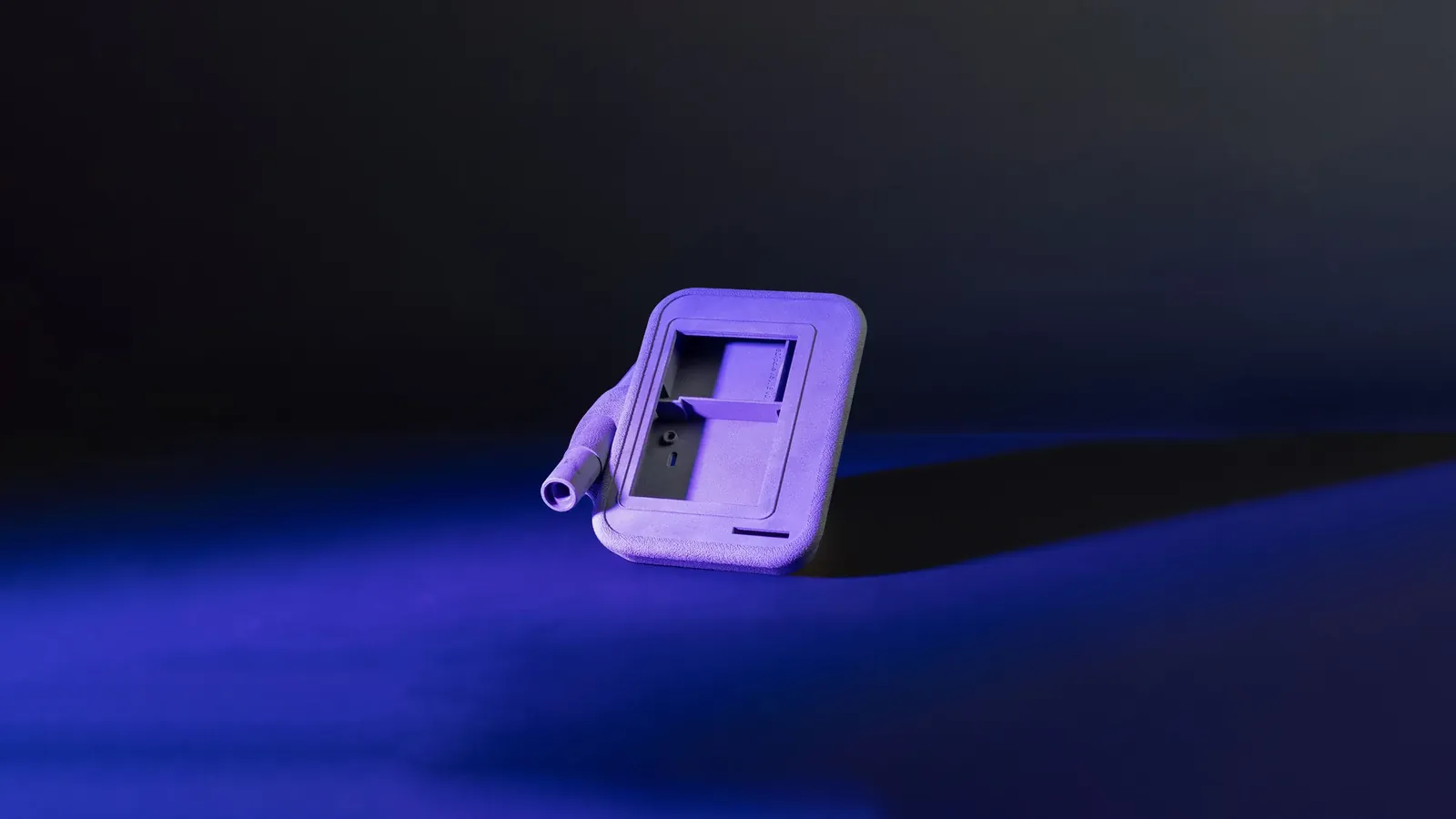
Textured electronics housing
We applied the texture directly to the 3D model, so the housing has its final geometry and surface pattern straight from the printer. Then we dye it black and install threaded inserts. The housing is ready for mounting the display, keypad and other components.
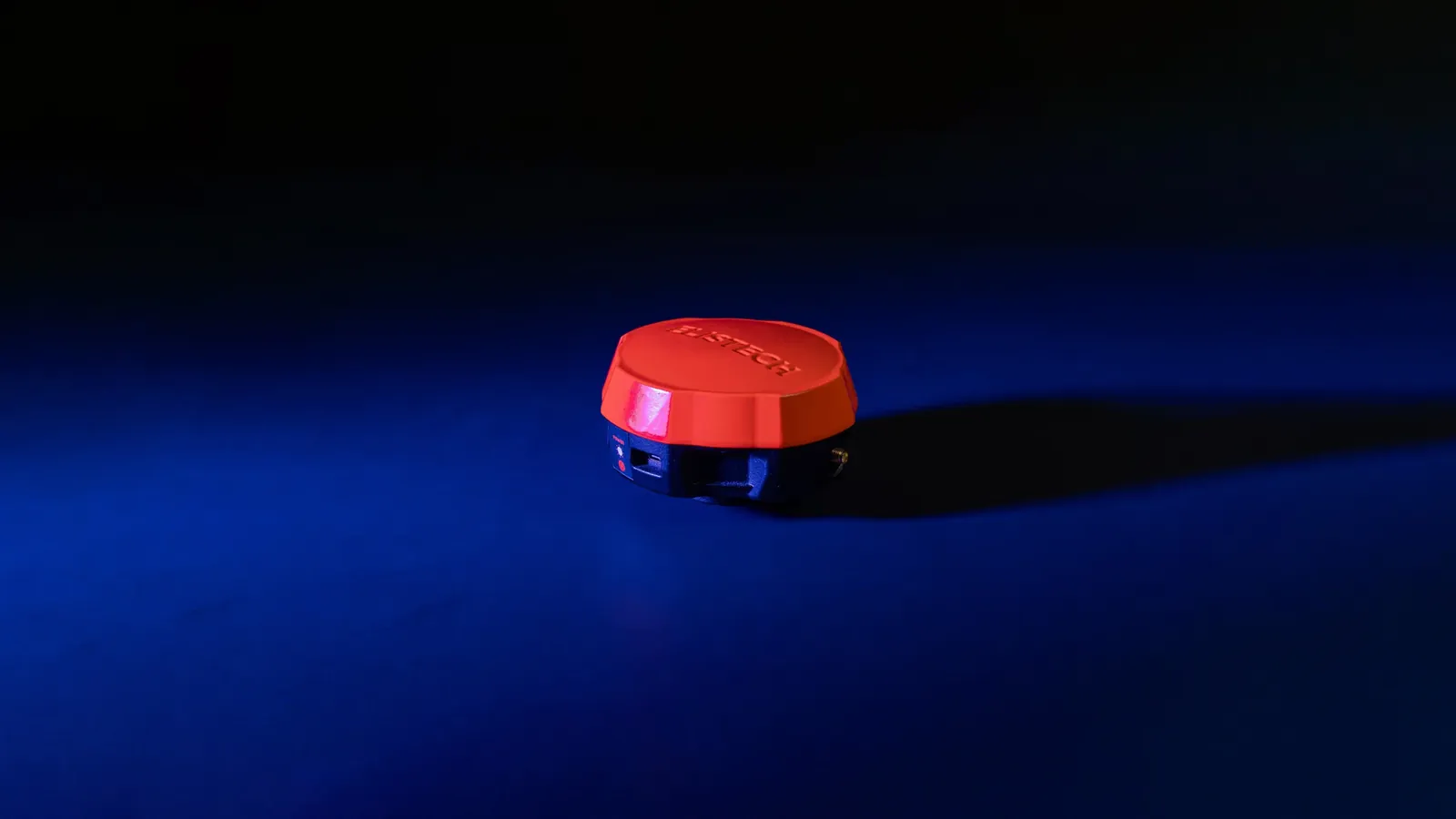
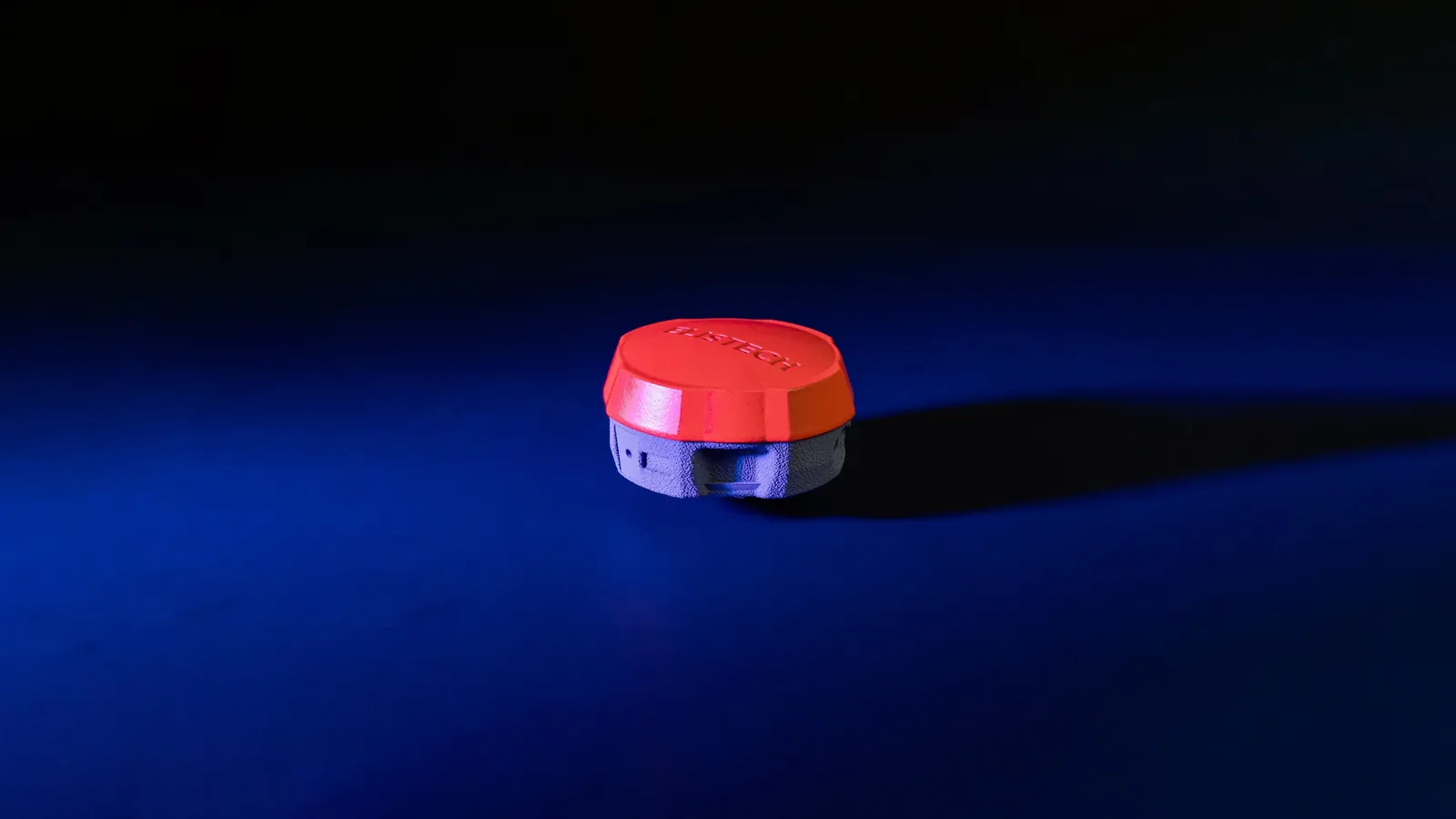
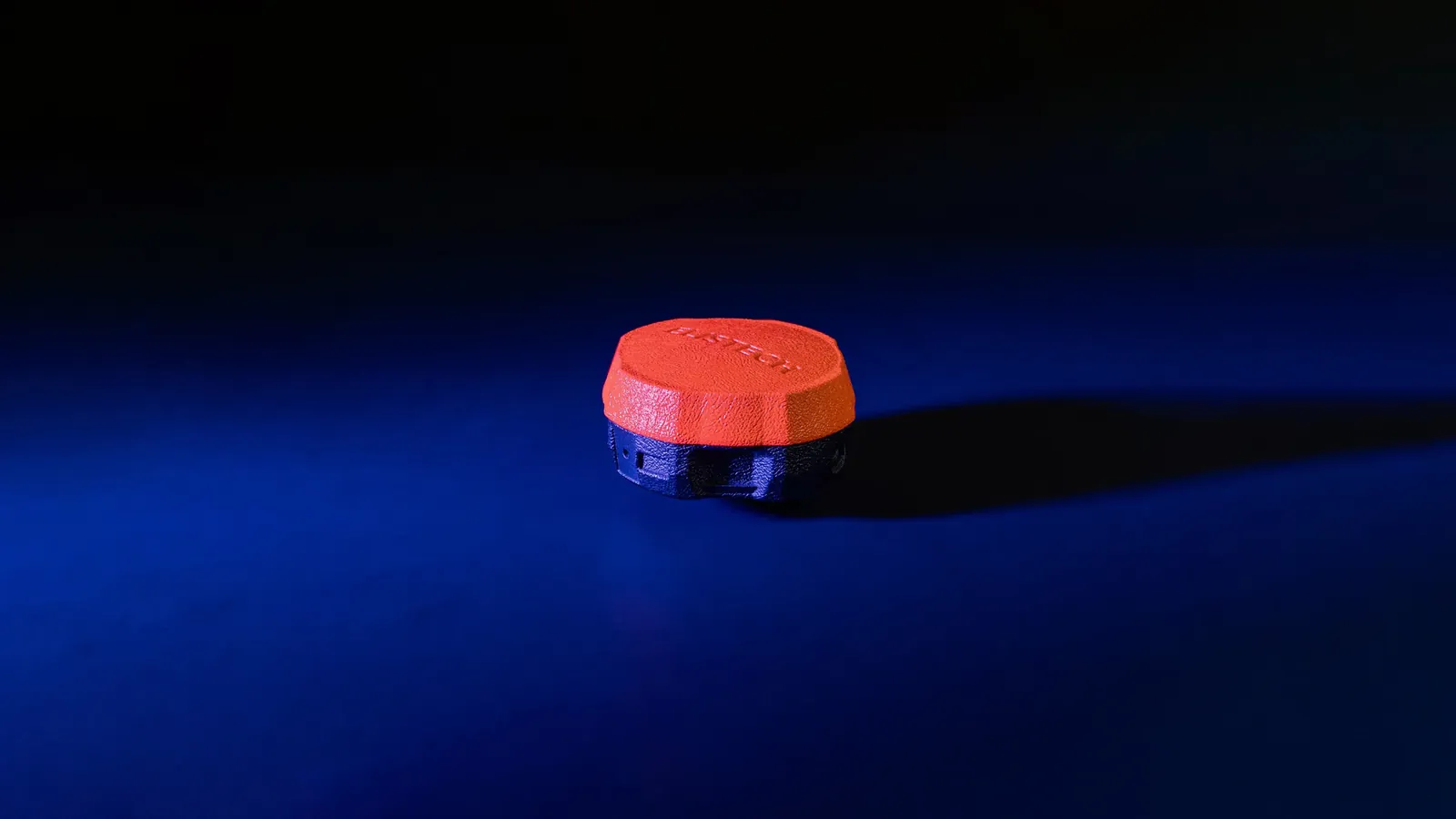
Custom RTK GPS device
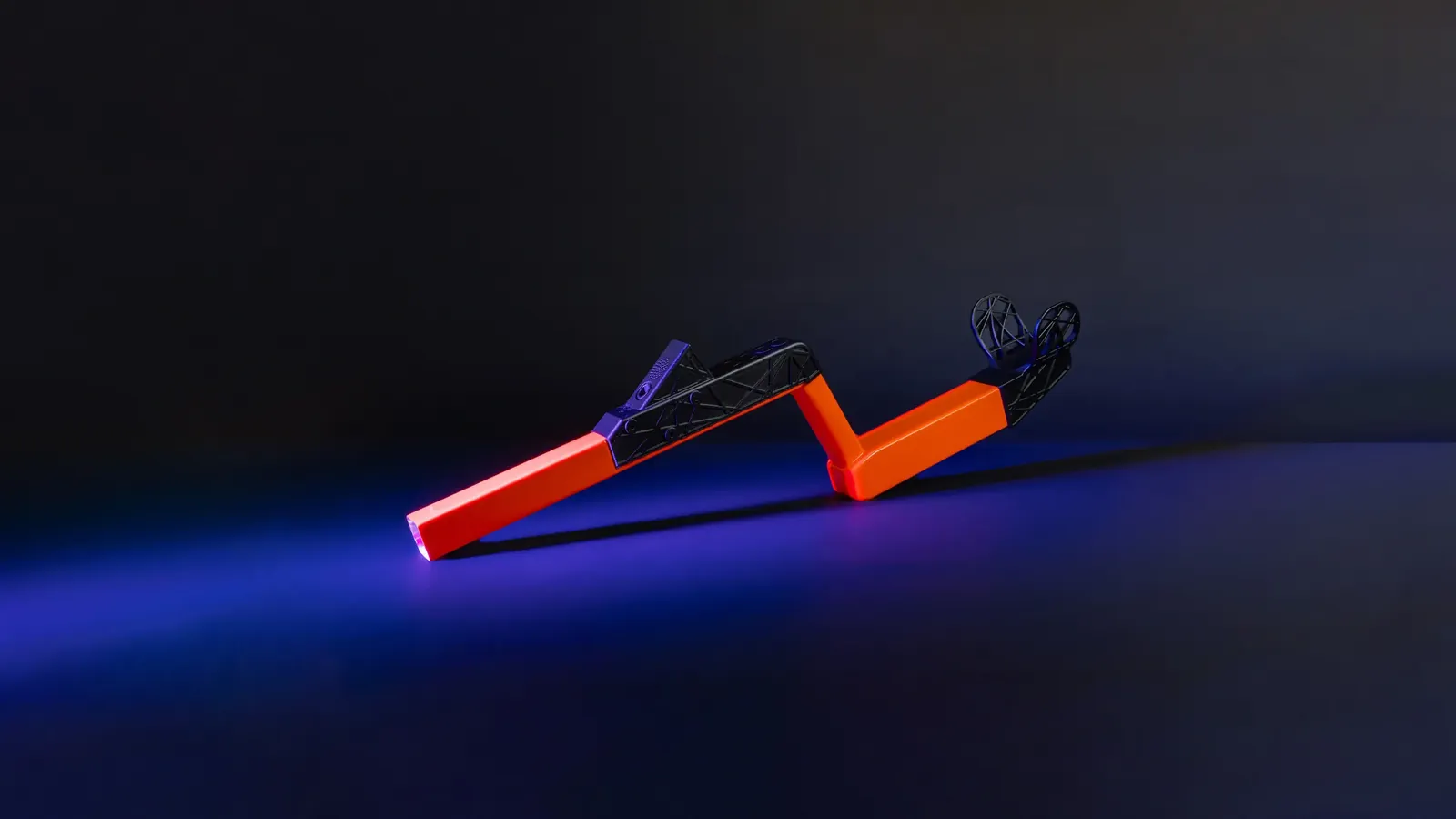
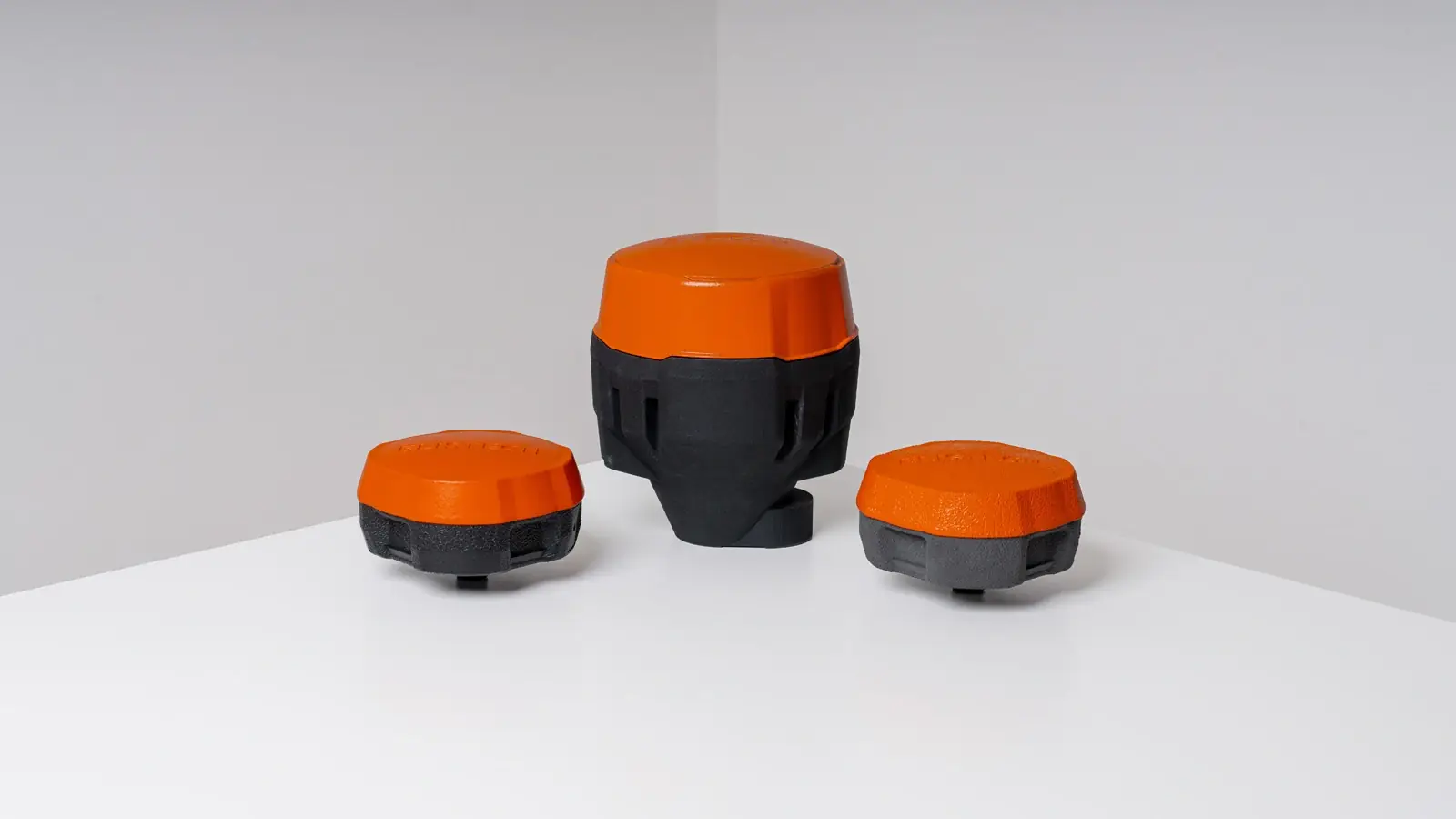
On this project we handled the whole production. We printed the parts with SLS, finished the bottom part in standard black and the top lid in the customer's RAL shade. We added stickers, threaded inserts and electronics and delivered a finished device.
Before the final version was chosen, we also made variants with different textures and colours so the customer could compare the look on real parts.
Related services
3D printing
Fast and flexible production of parts according to your ideas – from prototypes to finished components.
Surface finishing
Surface finishing of parts for appearance, functionality or durability. Colouring, dyeing, texturing.
Threaded insert installation
Integration of metal inserts into plastic parts for strong joints.
Frequently asked questions


Is an SLS part strong enough for end use?
Yes. SLS PA12 is used for housings, holders and machine parts. Unlike FDM printing, the part has no clearly weaker spots between layers.
How large a part can you print?
Up to 160 × 160 × 295 mm in one piece. We split a larger part and join it, or we use FDM printing.
Can an SLS part be used outdoors?
Yes, PA12 parts are also suitable for outdoor use.
How much does SLS printing cost?
The price depends on the part size, material, quantity and surface finish. 3D printing with us starts at €20 excluding VAT. In a batch the price per piece is lower because the whole chamber is used.
How quickly can you deliver?
We complete most orders within 4 working days and ship them within 10 calendar days at the latest. If an order needs more time, for example because of surface finishing or assembly, we will tell you the date in advance.
What file do you need?
Ideally STEP, STL or 3MF. If you do not have a model, we will create one with 3D scanning and modelling.






Related articles