
Powder materials PA12 and TPU for SLS printing
Published:
We use two powder materials for SLS printing. PA12 nylon for strong functional parts and flexible TPU for seals, dampers and soft parts. We compare their properties, surface and when to choose which.
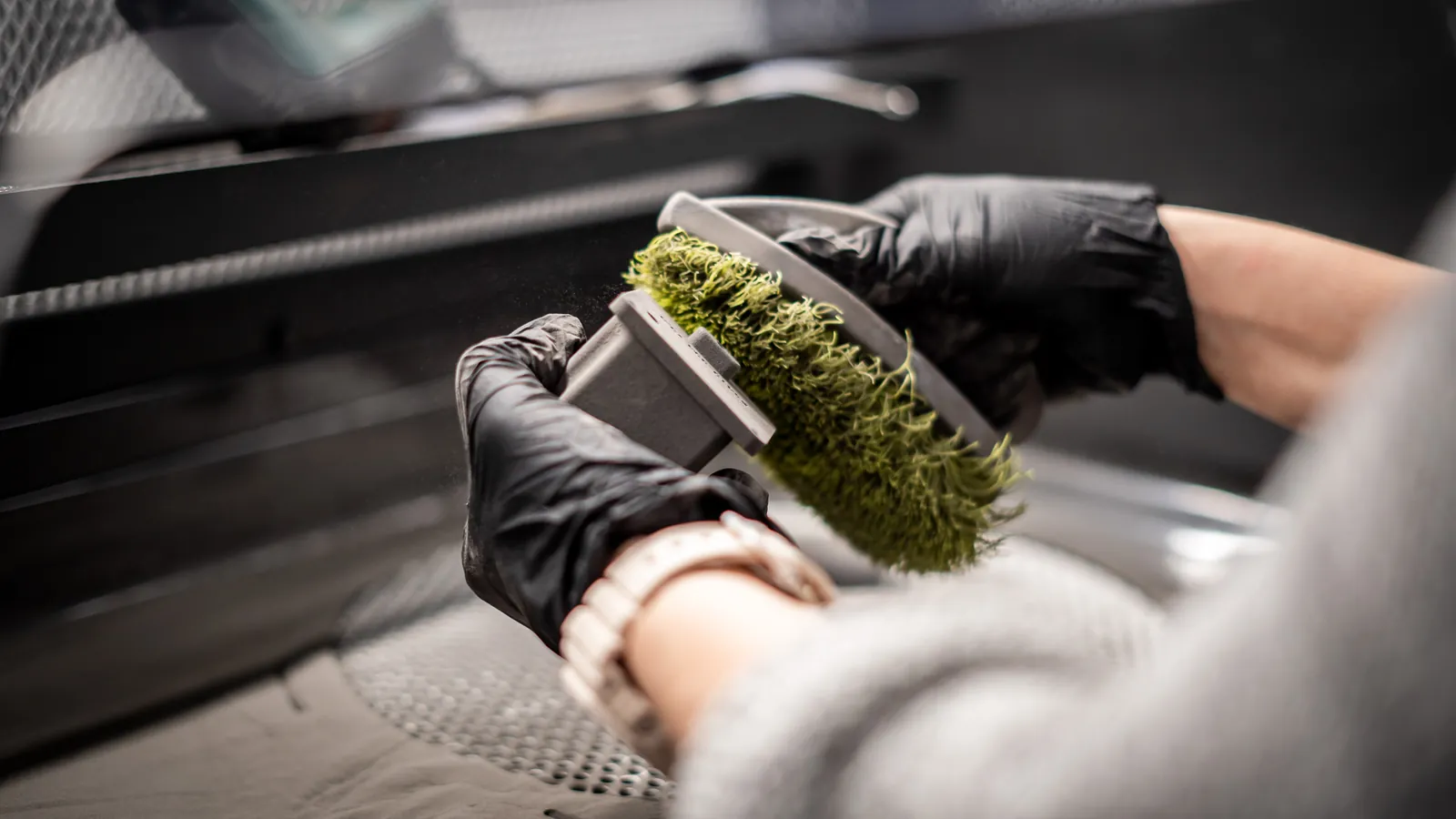
We print both materials on a Formlabs Fuse 1+ printer. The laser sinters fine powder layer by layer and the unsintered powder around the parts supports them during printing. How the technology works is covered in the article SLS 3D printing in PA12 nylon. Here we focus on the materials.
PA12 nylon and its properties
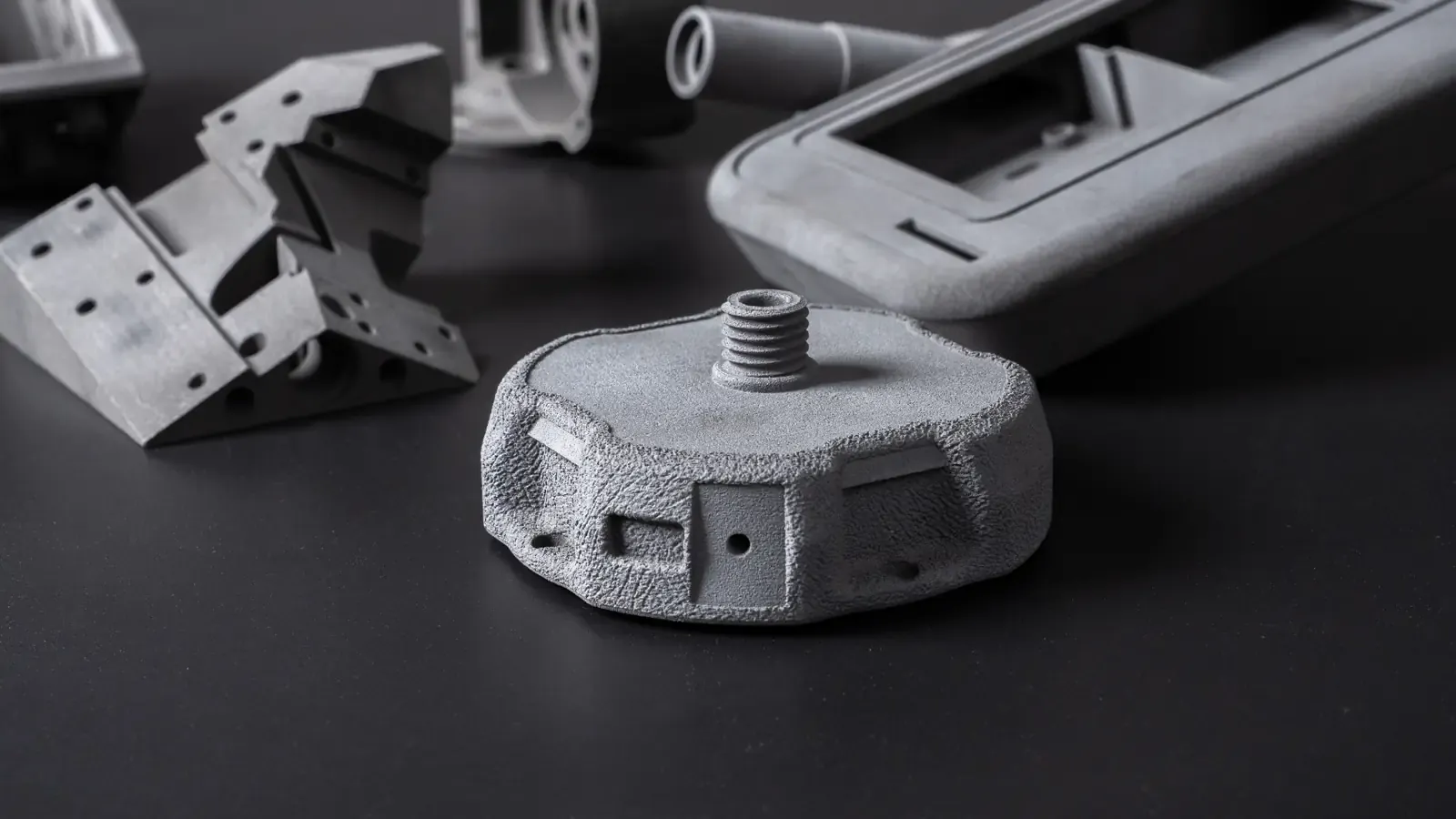
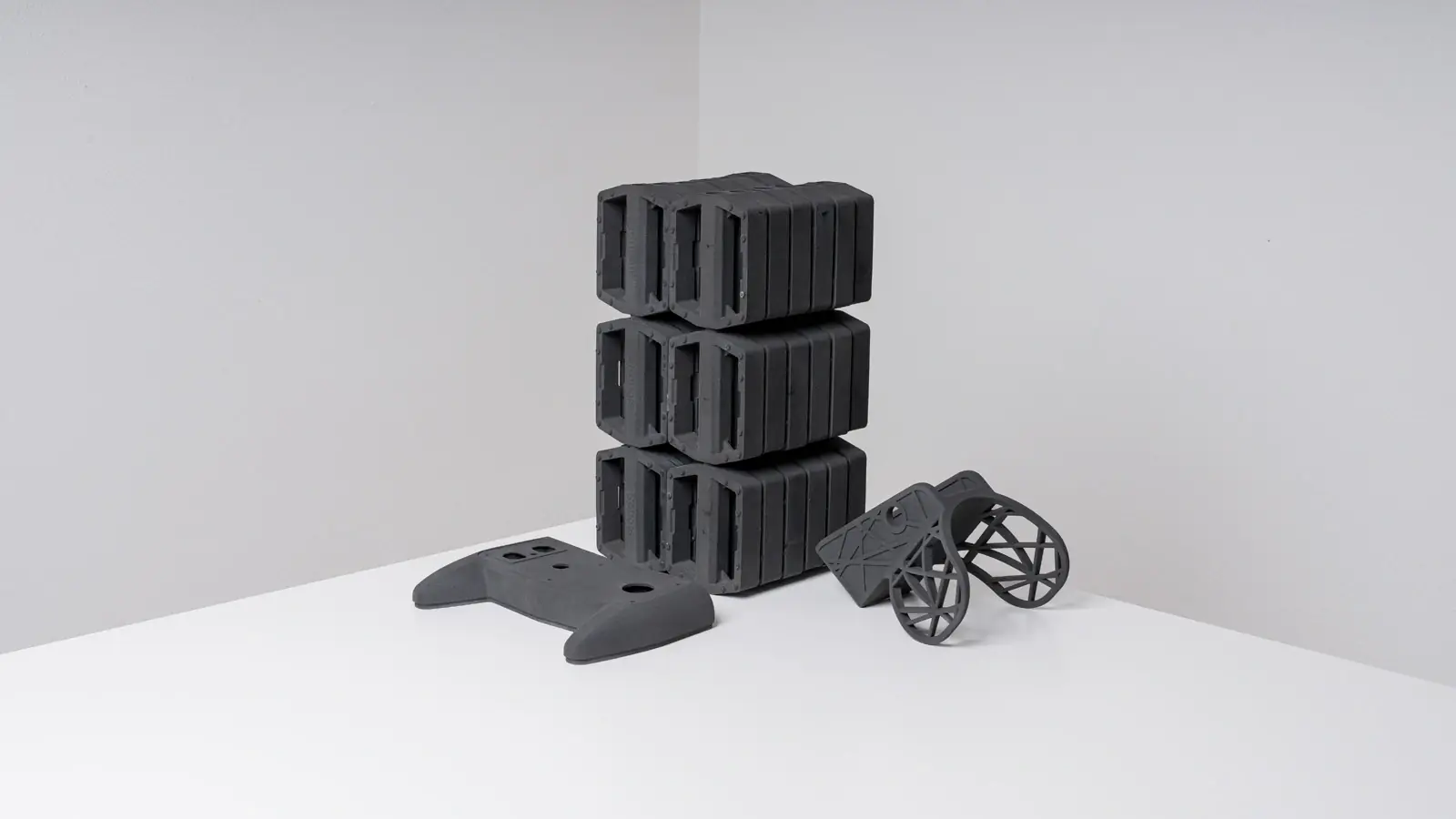
PA12 is the most widely used SLS material. It combines strength with toughness, so when overloaded the part bends rather than breaks. It is dimensionally stable, resists oils, fuel and most chemicals and copes with outdoor use.
| Property | Value |
|---|---|
| Tensile strength | 46-51 MPa |
| Tensile modulus | 1,600-1,850 MPa |
| Elongation at break | 18-25 % |
| Flexural strength | 46-58 MPa |
| Flexural modulus | 1,300-1,630 MPa |
| Heat deflection temperature (HDT) at 0.45 MPa | 140-147 °C |
| Heat deflection temperature (HDT) at 1.8 MPa | 82-86 °C |
The values come from the PA12 data sheet. A part with thin walls or an unsuitable orientation may have lower values.
What PA12 is good for
- electronics and instrument housings,
- sensor holders, clips and brackets,
- jigs and gauges for production,
- moving assemblies, hinges and snap fits,
- end-use parts in small batches.
TPU for flexible parts
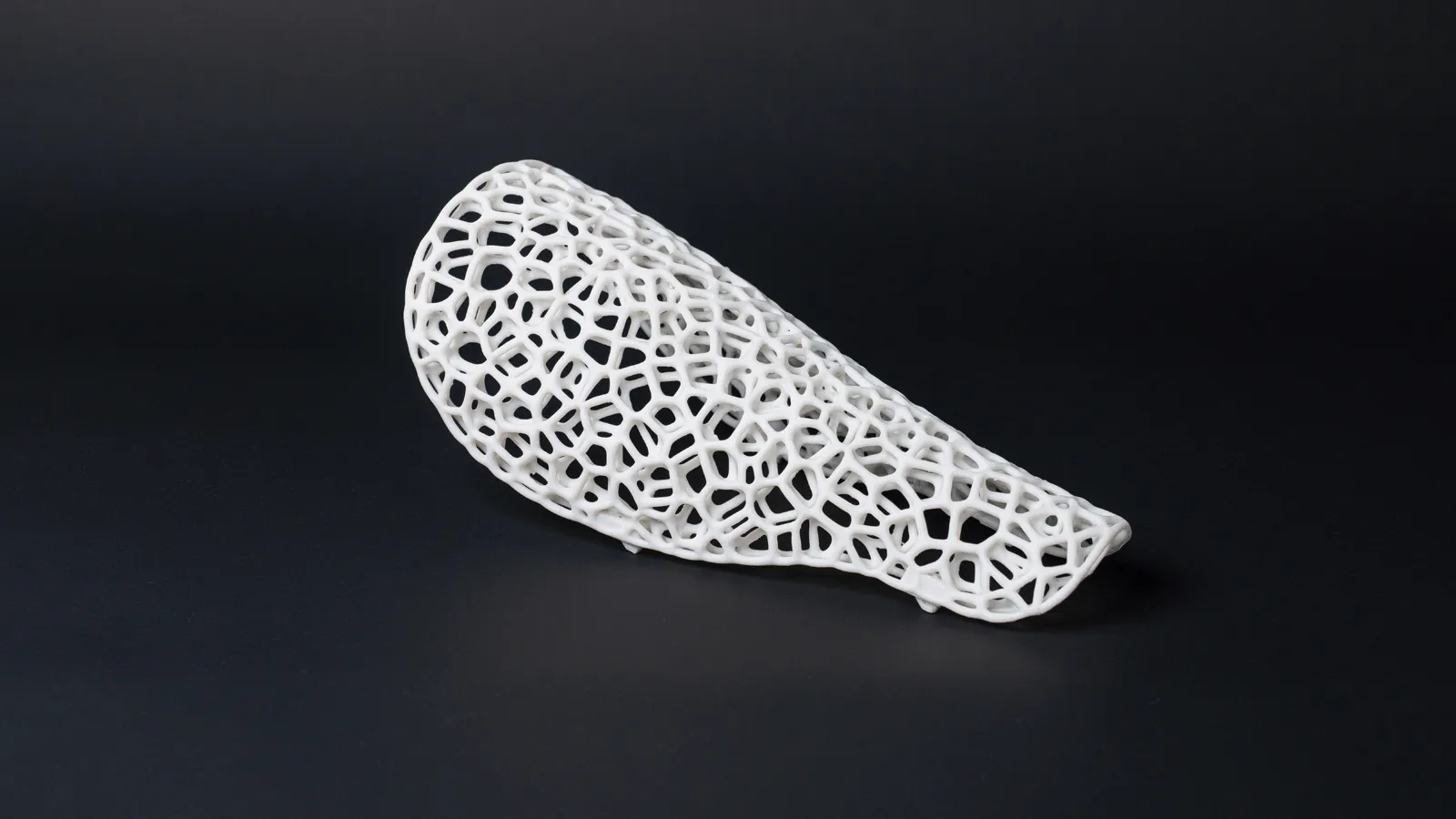
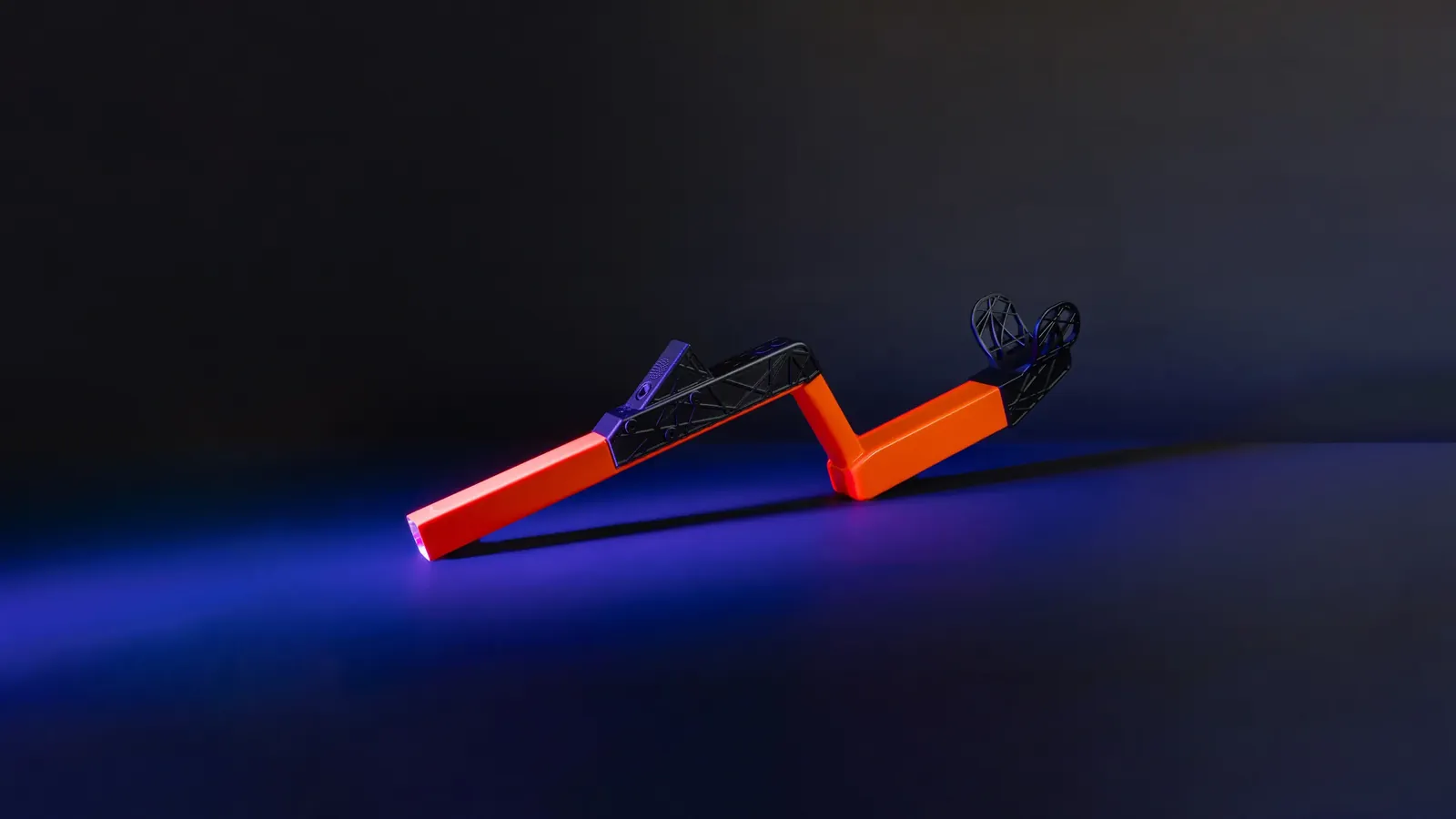
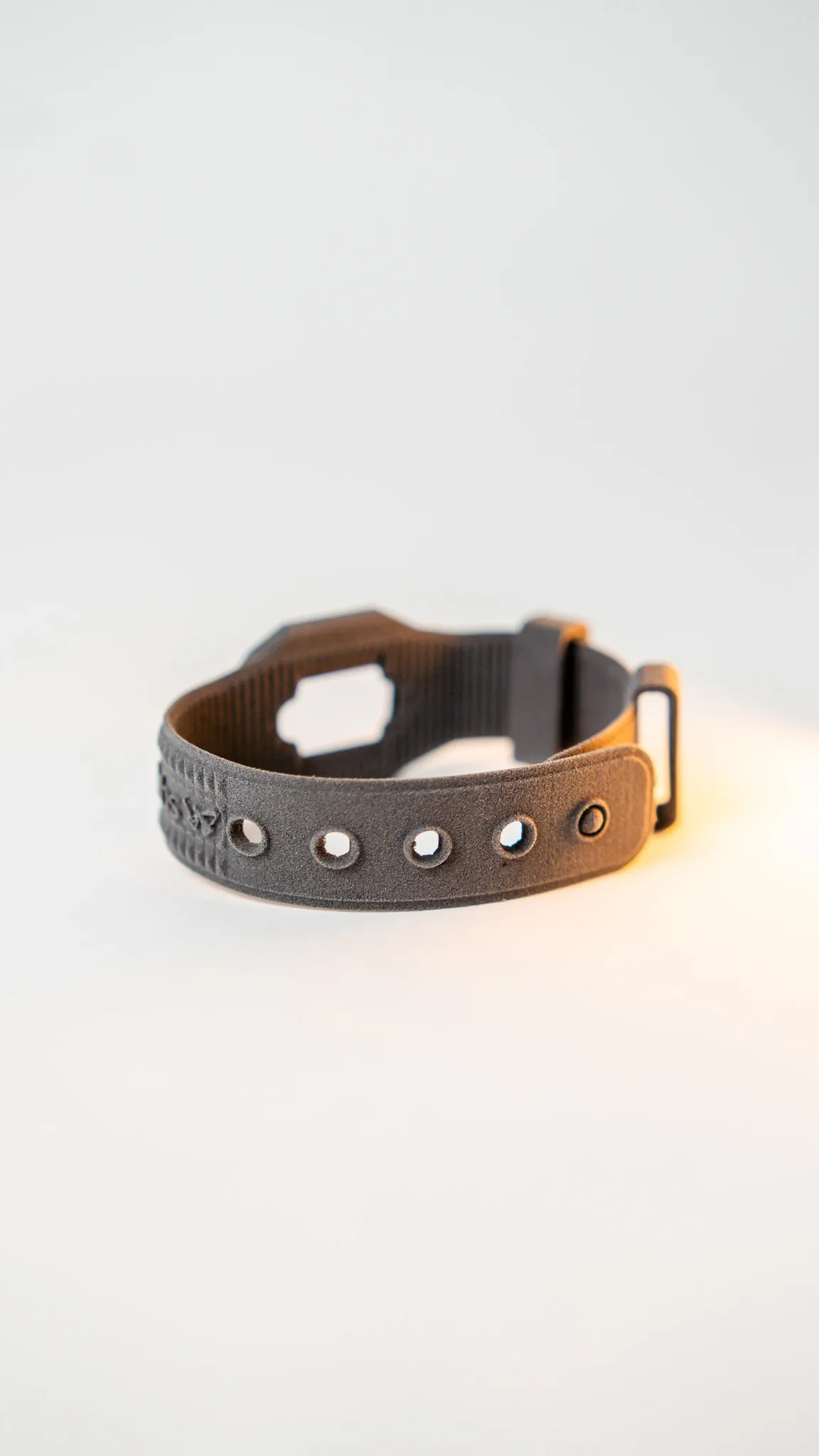
TPU is a thermoplastic polyurethane that returns to its original shape after being compressed or bent. It resists abrasion and impact and dampens vibration well. With SLS printing it can also have a complex internal shape, such as a lattice that works as a soft cushion.
We use TPU for:
- seals and gaskets,
- dampers, stops and bumpers,
- soft grips and handles,
- protective covers and cases,
- lattice cushioning inserts.
Compared with PA12, TPU tolerates lower temperatures and fine details are not as sharp. If you need a flexible part with a very smooth surface, we can also consider a flexible SLA resin or a silicone part.
PA12 vs TPU
| PA12 | TPU | |
|---|---|---|
| Character | rigid and tough | flexible like rubber |
| Tensile strength | 46-51 MPa | lower, the part stretches |
| Elongation | 18-25 % | many times higher |
| Heat resistance | high | lower |
| Abrasion resistance | good | very good |
| Surface | finely grained, matte | grainy, matte |
| Typical use | housings, holders, jigs, batches | seals, dampers, soft grips |
When choosing, the main question is whether the part should bend. If yes, it is TPU. If the part must hold its shape and carry a load, it is PA12.
Dyeing and surface
PA12 parts are naturally grey with a finely grained matte surface. For finishing we offer:
- Black dyeing. The colour penetrates the surface, does not peel off and does not change dimensions. It is the most common finish for production parts.
- Painting to RAL. More than 55 shades in stock, matte or glossy finish.
- Sanding and polishing. PA12 can be sanded to a smoother surface.
- Texturing. We design the pattern into the 3D model and it is created during printing.
Painting is not suitable for TPU because the paint layer cracks when the part bends. With flexible parts, plan on the natural colour of the material.
Data sheets
The PA12 powder data sheets are on the Technical data sheets page. We will send you the values for SLS TPU on request.
Related services
3D printing
Fast and flexible production of parts according to your ideas – from prototypes to finished components.
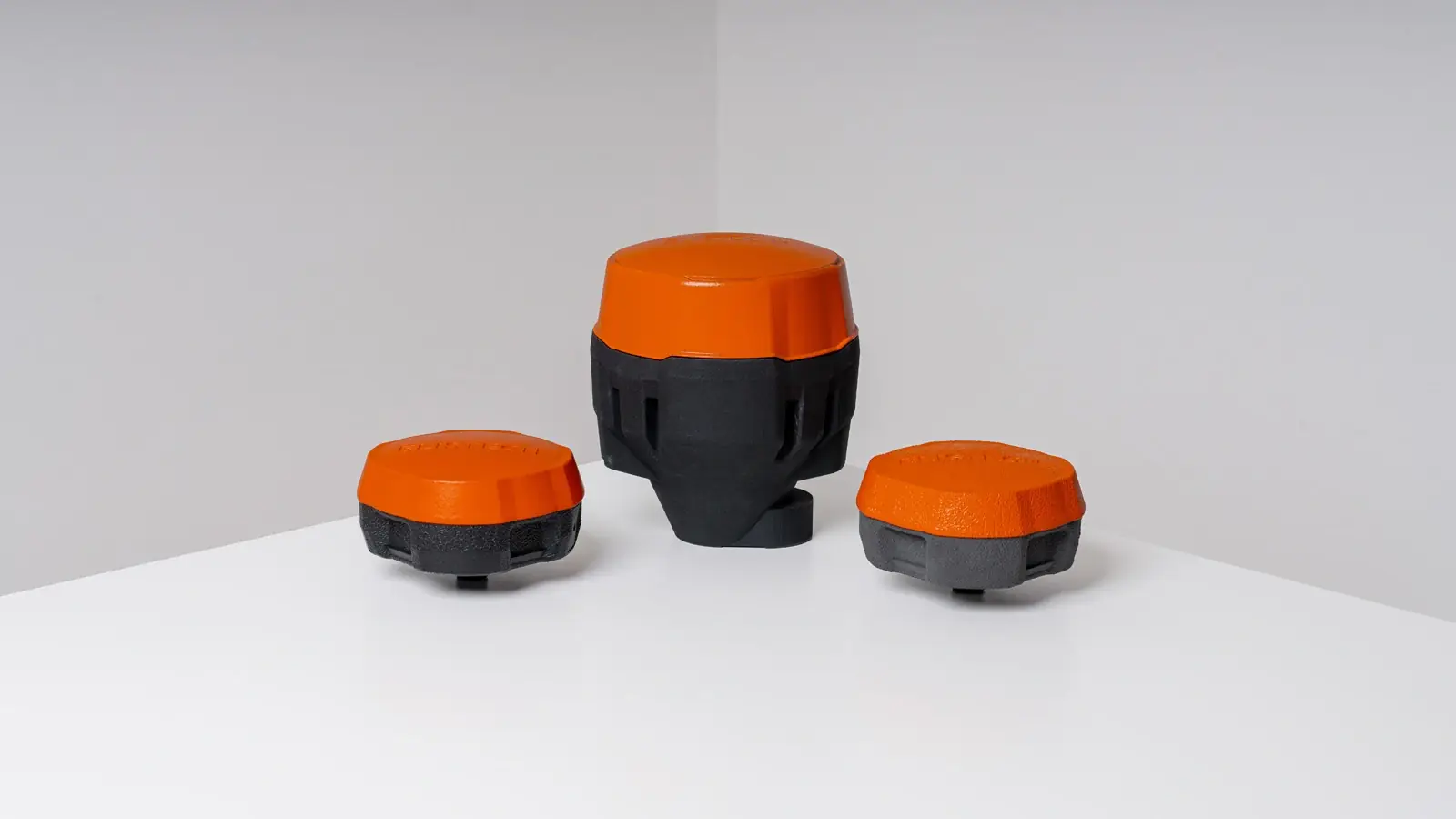
Surface finishing
Surface finishing of parts for appearance, functionality or durability. Colouring, dyeing, texturing.
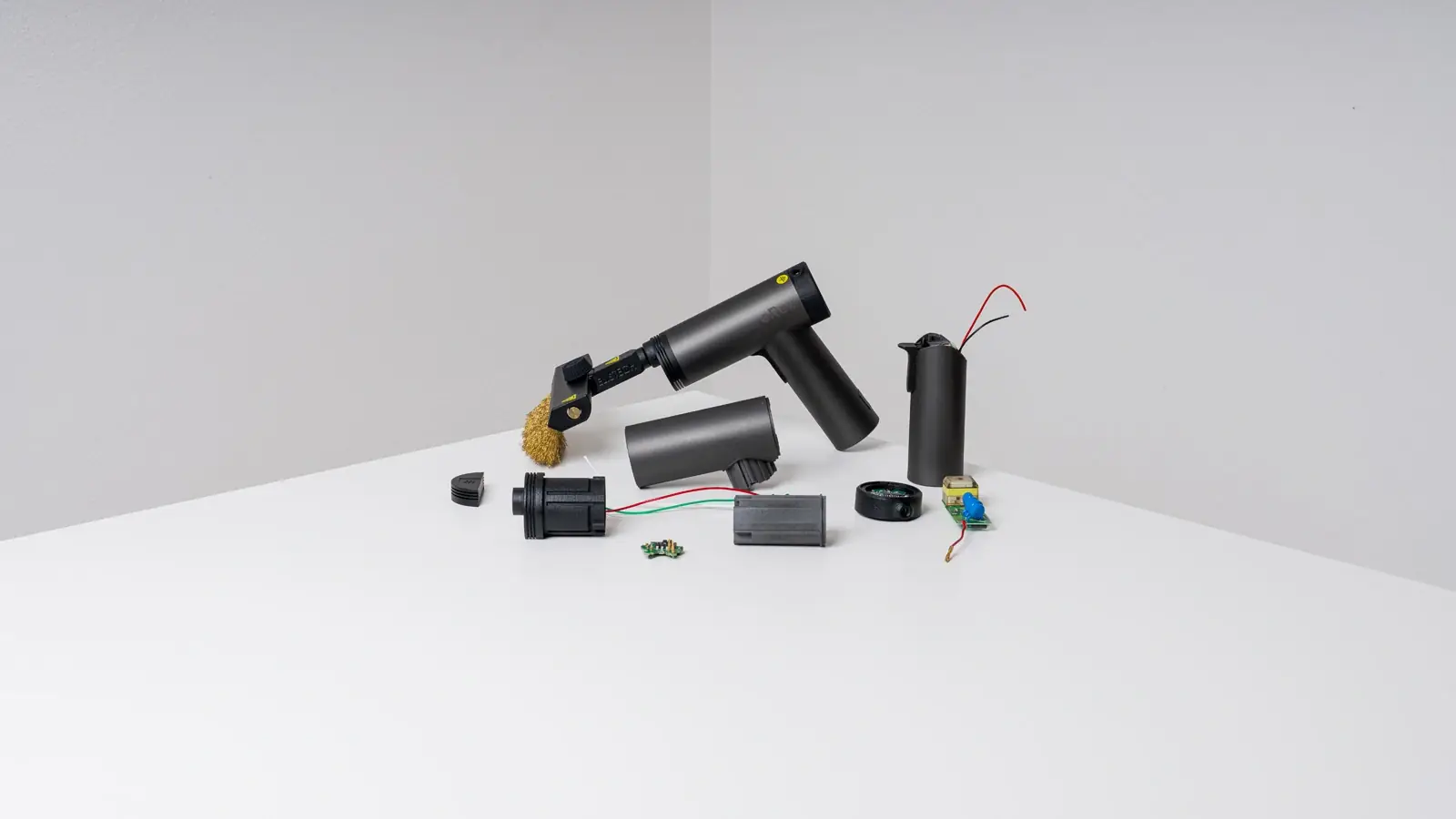
Assembly
We provide assembly as part of production when you have parts or components manufactured by us. Based on your requirements, we can assemble them into a functional unit.
Frequently asked questions


Which material is stronger?
PA12. TPU is flexible by design, so it deforms under load. The tensile strength of PA12 is 46-51 MPa.
What temperatures can a PA12 part withstand?
Under a small load of 0.45 MPa it starts to deform only at 140-147 °C, under a load of 1.8 MPa at 82-86 °C.
What is the minimum wall thickness?
For PA12 we recommend at least 1 mm. For TPU and large surfaces we design thicker walls.
Can I combine PA12 and TPU in one assembly?
Yes. For example, we print a PA12 housing and a TPU seal separately and assemble them into one unit.







Related articles