
Resins for SLA printing from rigid to elastic and clear
Published:
SLA printing is not only for good-looking models. Depending on the resin, a part can be as stiff as glass-filled plastic, as flexible as rubber, clear, heat resistant or antistatic. We go through the resin types, their properties and uses.
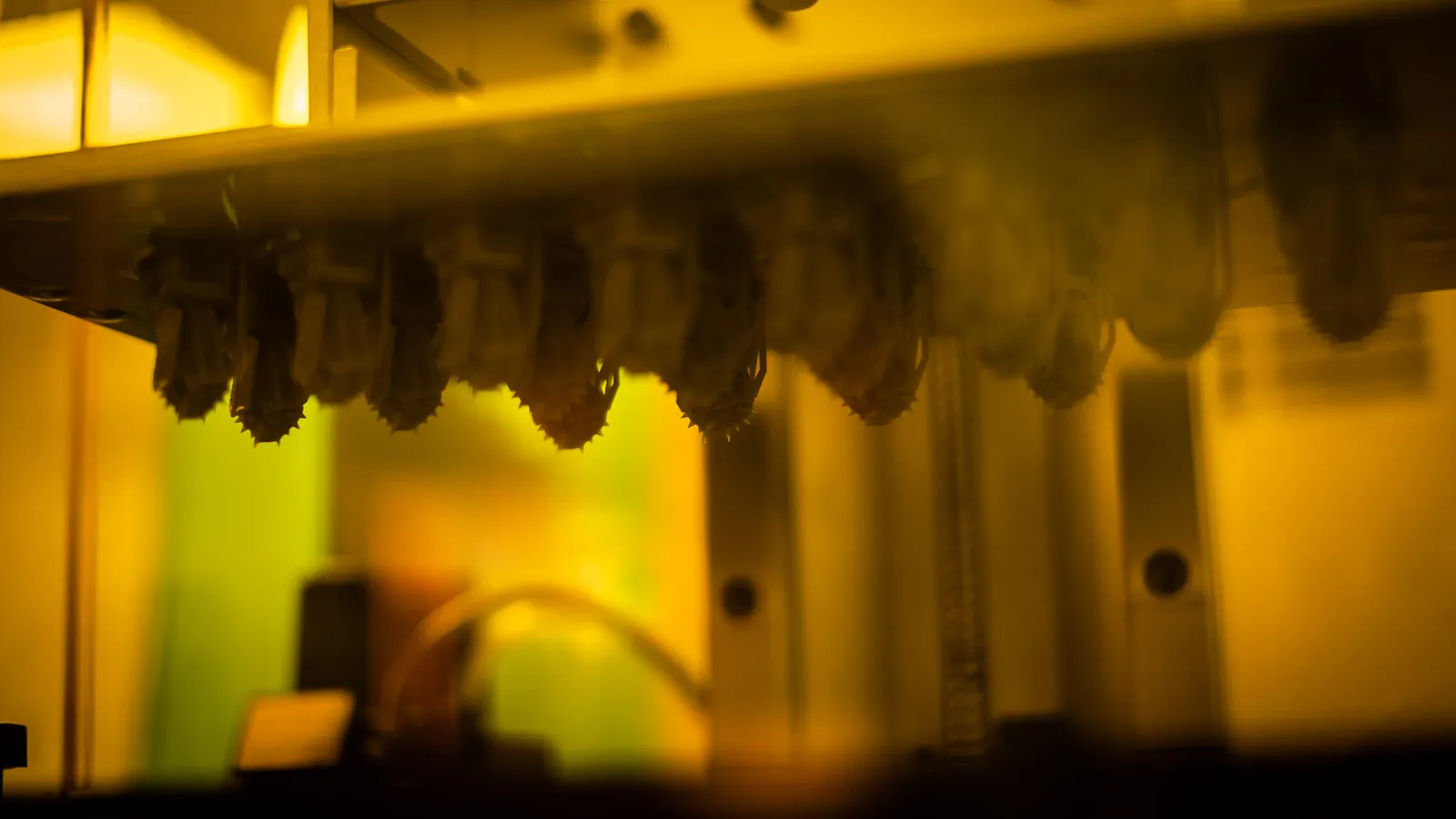
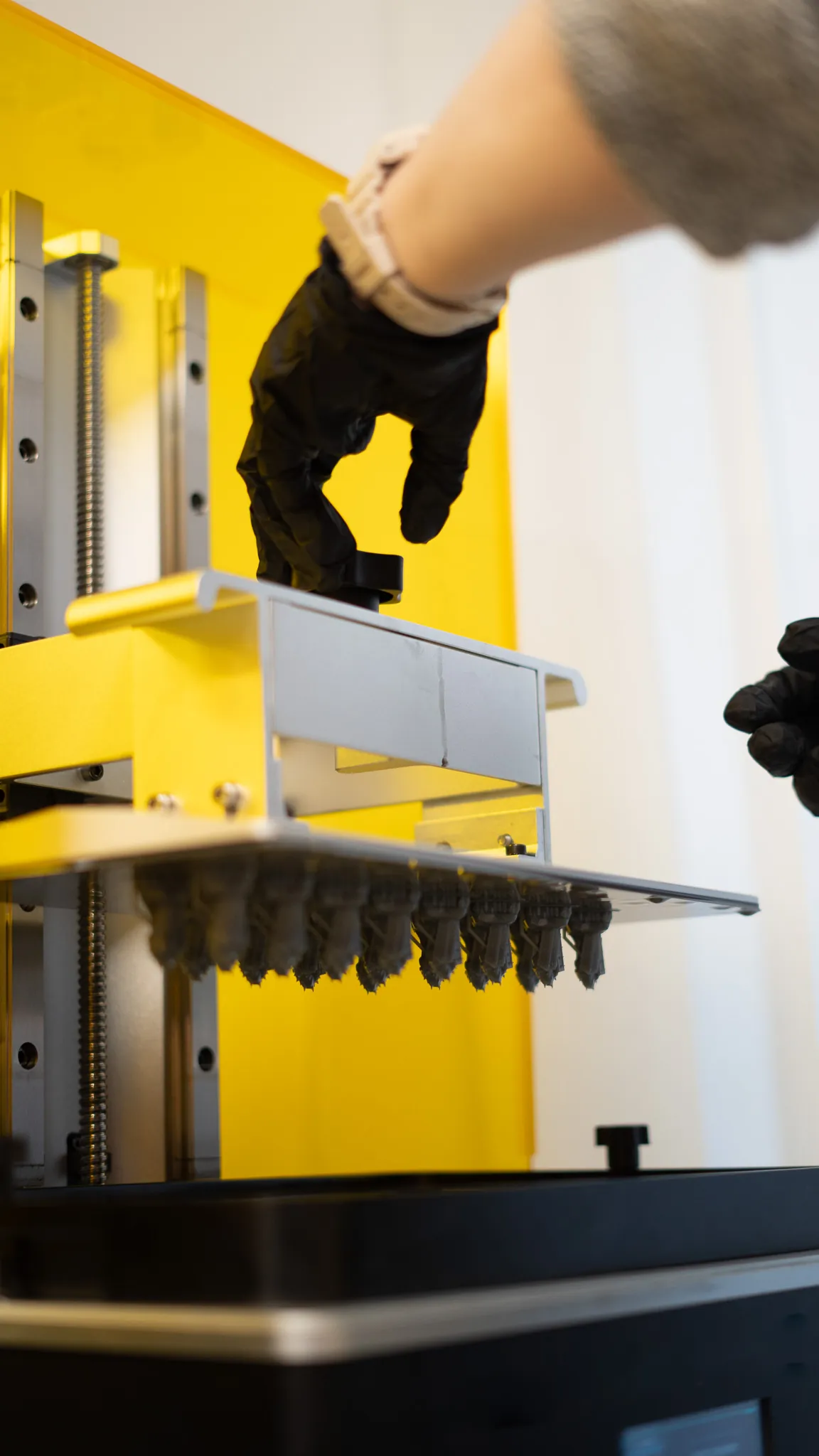
For SLA printing we use a large-format Formlabs Form 4BL printer and Formlabs resins. How the technology works is covered in the article SLA 3D printing in resin. Here we focus on the resins themselves.
Types of SLA resins
Standard resins
General Purpose and Draft are basic resins with a smooth surface and fine details. Draft prints the fastest and suits quick shape checks. We use General Purpose for visual prototypes, presentation models and masters.
Rigid resins
Rigid 10K is a glass-filled resin. It is very stiff, dimensionally stable and withstands higher temperatures. It is used for jigs, precise parts and moulds, for example for small batches of injection moulded parts. It is brittle, though, so it is not suitable for parts that should bend.
Tough resins
Tough 1500 and Durable withstand bending and impact without cracking. They behave similarly to polypropylene or ABS. We use them for functional prototypes, snap fits, housings and parts that are assembled and taken apart.
Flexible resins
Flexible 80A and Elastic 50A are soft and flexible. The number in the name corresponds to the Shore A hardness. Elastic 50A is softer and suits parts that should stretch or compress. Flexible 80A is firmer, similar to harder rubber.
Clear resins
Clear is translucent after printing and almost transparent after sanding and lacquering. It is used for light guides, indicator covers, windows and models where internal channels or fluid flow need to be visible.
Special resins
- High Temp withstands high temperatures. It suits parts close to heat sources and moulds into which hot material is cast.
- ESD is antistatic. It protects sensitive electronics during production and assembly, for example as a fixture or a component tray.
- Flame Retardant is self-extinguishing. It is used for housings and parts in spaces with fire safety requirements.
Resin properties compared
| Resin | Stiffness | Impact resistance | Flexibility | Heat resistance | Typical use |
|---|---|---|---|---|---|
| General Purpose, Draft | medium | low | none | low | models, visual prototypes |
| Rigid 10K | very high | low | none | high | jigs, moulds |
| Tough 1500, Durable | medium | high | low | medium | functional prototypes, snap fits |
| Flexible 80A | low | high | high | low | seals, soft parts |
| Elastic 50A | very low | high | very high | low | elastic parts, tissue models |
| Clear | medium | low | none | low | light guides, windows |
| High Temp | high | low | none | very high | parts near heat sources, moulds |
| ESD, Flame Retardant | high | medium | none | medium | electronics, industry |
To give you an idea of the values of a standard resin, here are the figures from the data sheet of the Grayscale resin. It has a tensile strength of 32 to 60 MPa, a modulus of elasticity of 2,500 to 2,800 MPa, an elongation of 7 to 9 % and a heat deflection temperature of 48 to 70 °C. You will find the values of other resins in their data sheets.
What SLA resins are used for
- Presentation prototypes. After painting they look like a finished product.
- Precise small components. Thin walls from 0.2 mm and fine details.
- Moulds and masters. For silicone parts and for small batches of castings.
- Jigs and gauges. Rigid resins hold a precise shape.
- Parts for electronics. Antistatic and flame retardant housings and holders.
Finishing resin parts
We wash every part after printing, remove the supports and post-cure it with UV light. Only then does it have the properties listed in the data sheet. We sand away support marks on rigid resins. On flexible resins they cannot be removed completely, so we orient the part to keep them on a hidden side.
Parts in rigid resins can be painted to RAL. We sand clear parts and coat them with clear lacquer. Laser engraving is not suitable for resins, so we model markings directly into the part.
Resin data sheets
On the Technical data sheets page you will find sheets for General Purpose, Draft, Rigid 10K, Tough 1500, Durable, Flexible 80A, Elastic 50A, Clear, High Temp, ESD and Flame Retardant.
Related services
3D printing
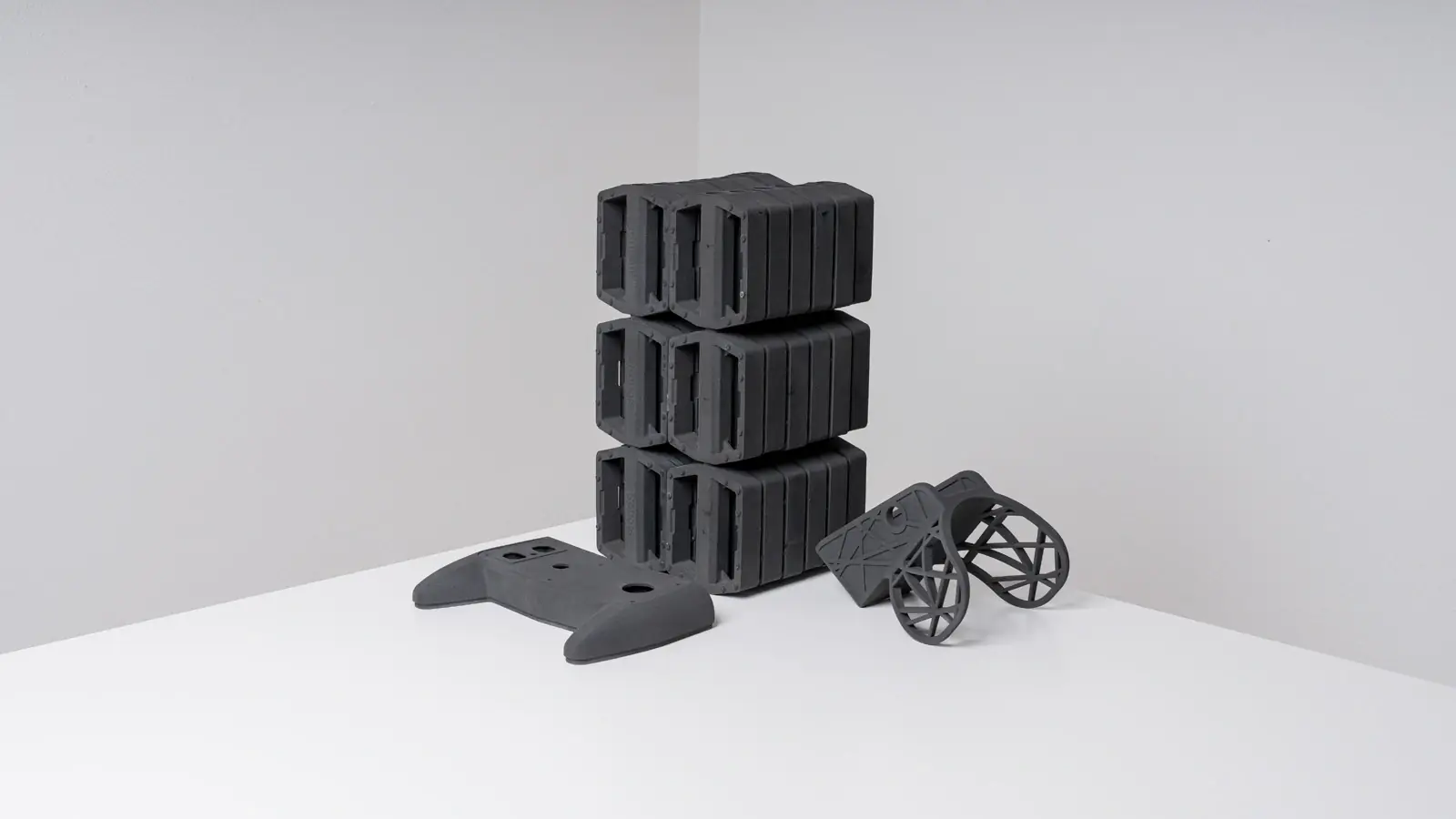
Fast and flexible production of parts according to your ideas – from prototypes to finished components.
Silicone parts
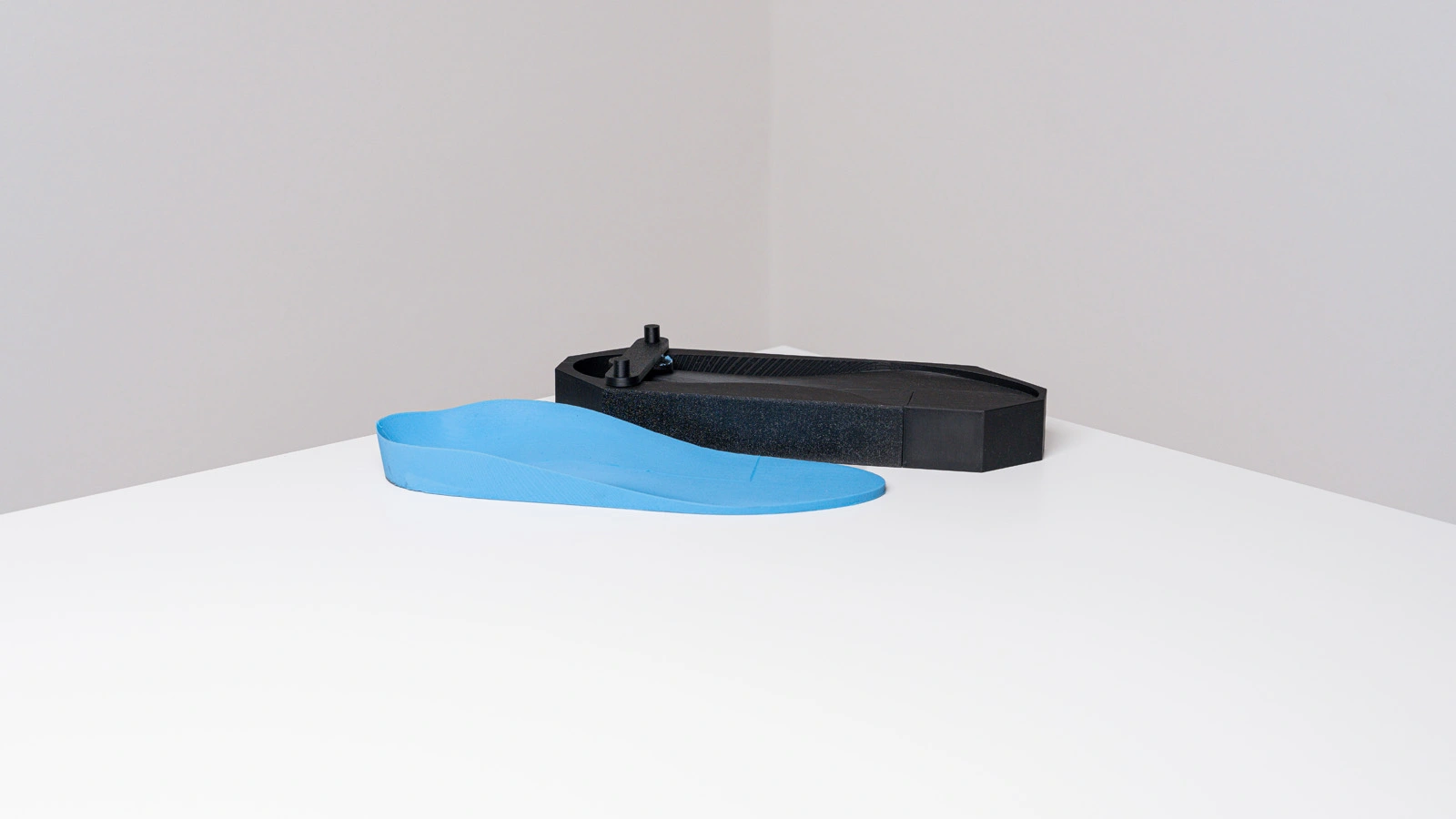
Soft and flexible parts suitable for seals, damping or skin contact.
Surface finishing
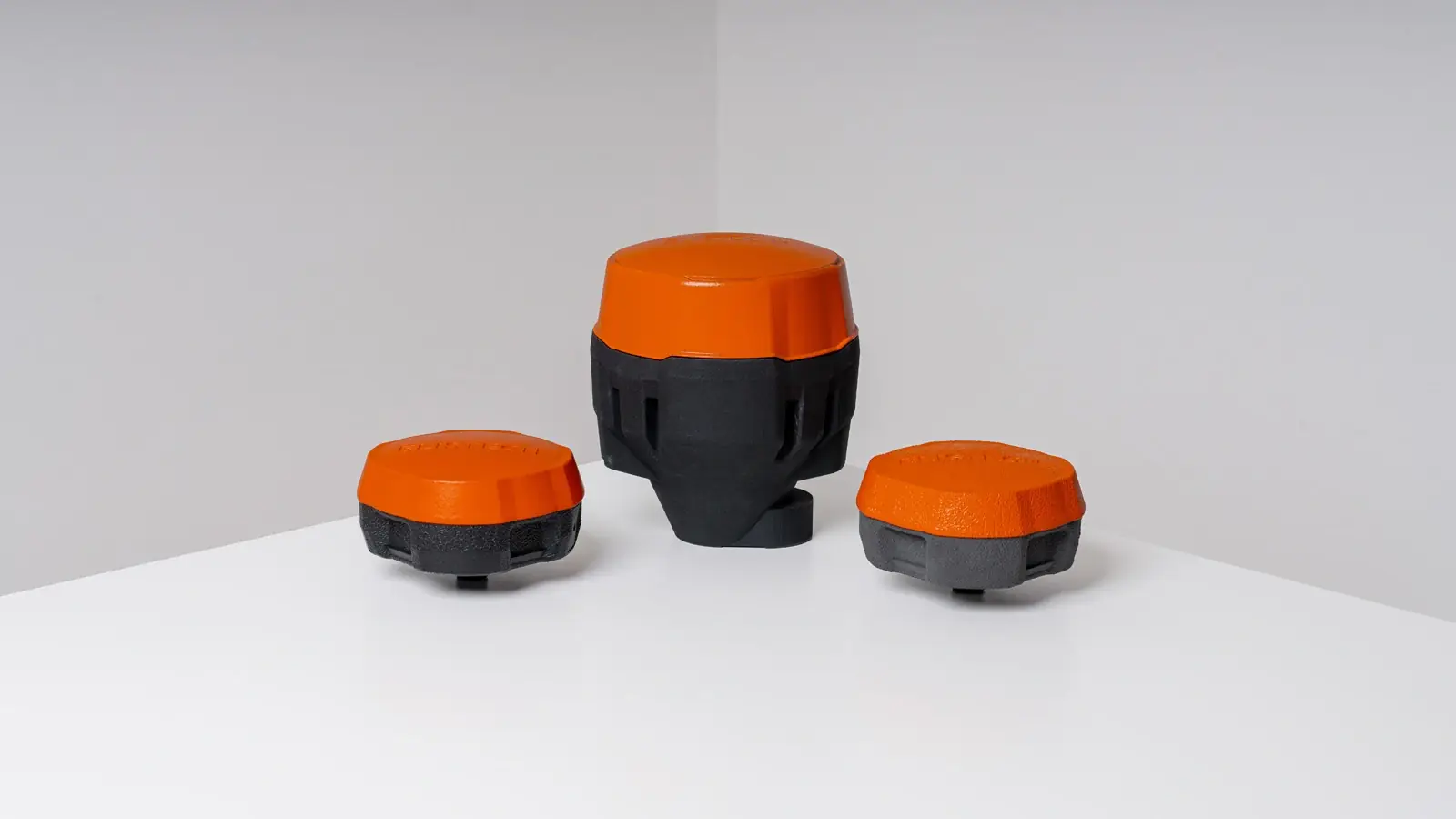
Surface finishing of parts for appearance, functionality or durability. Colouring, dyeing, texturing.
Frequently asked questions


Which resin is the strongest?
It depends on what strength means for your part. Rigid 10K is the stiffest, while Tough 1500 or Durable best withstand impact and bending.
Can a fully transparent part be printed in resin?
Clear resin is translucent after printing. We make it glass-clear only by sanding and lacquering.
Can a resin part be used in the sun?
Most resins gradually change colour and lose strength under long exposure to sunlight. For outdoor parts we recommend SLS in PA12 or FDM in ASA.
Can a flexible resin replace silicone?
For a prototype, yes. For seals and soft parts in a production run, cast silicone is more durable.







Related articles