
SLA 3D printing in resin for precise parts with a smooth surface
Published:
SLA printing cures liquid resin with light, layer by layer. The result is parts with fine details and a smooth surface that look like a finished product. We explain how SLA works, which resins we use and why SLA is also a good basis for silicone castings.
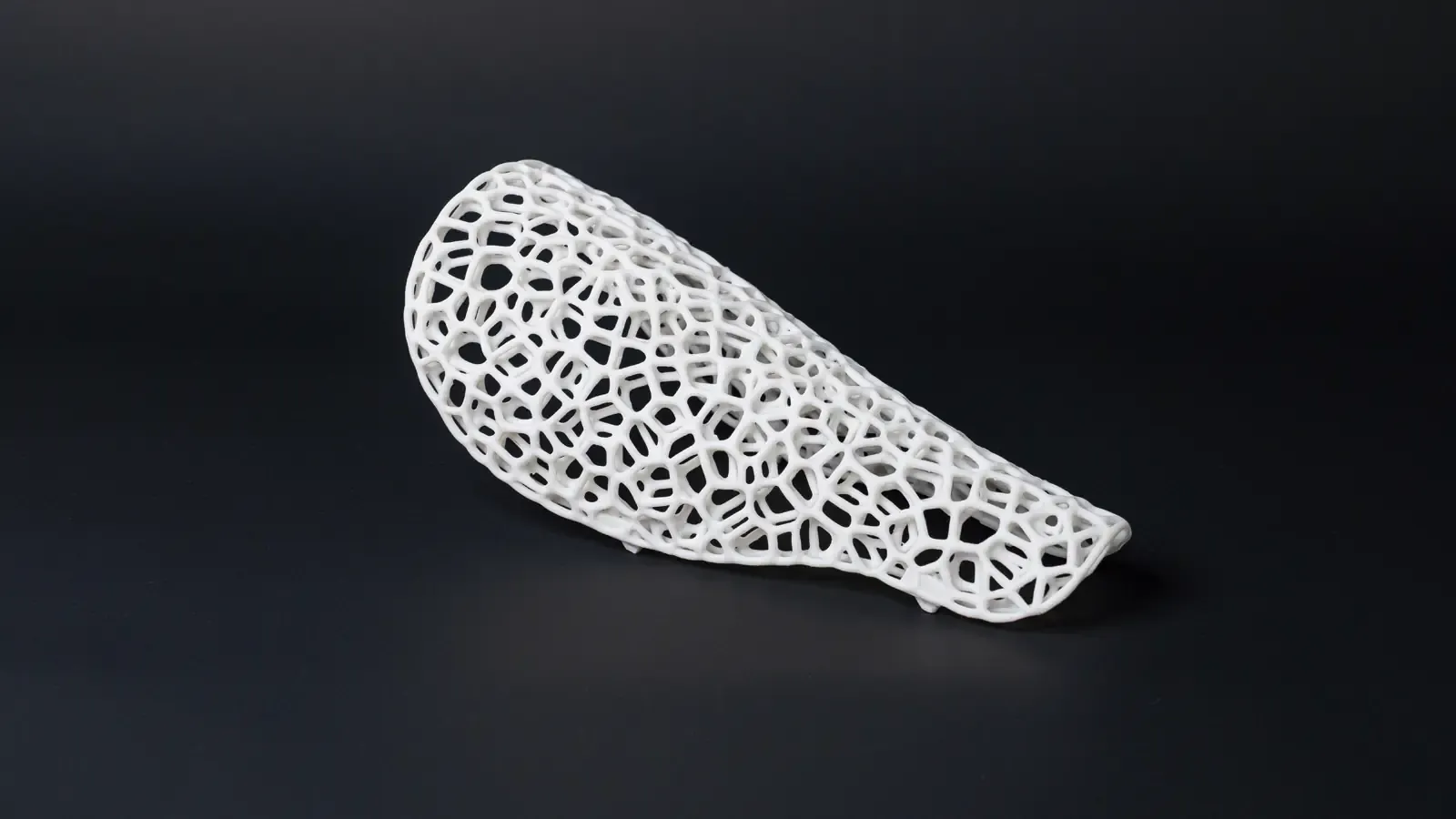
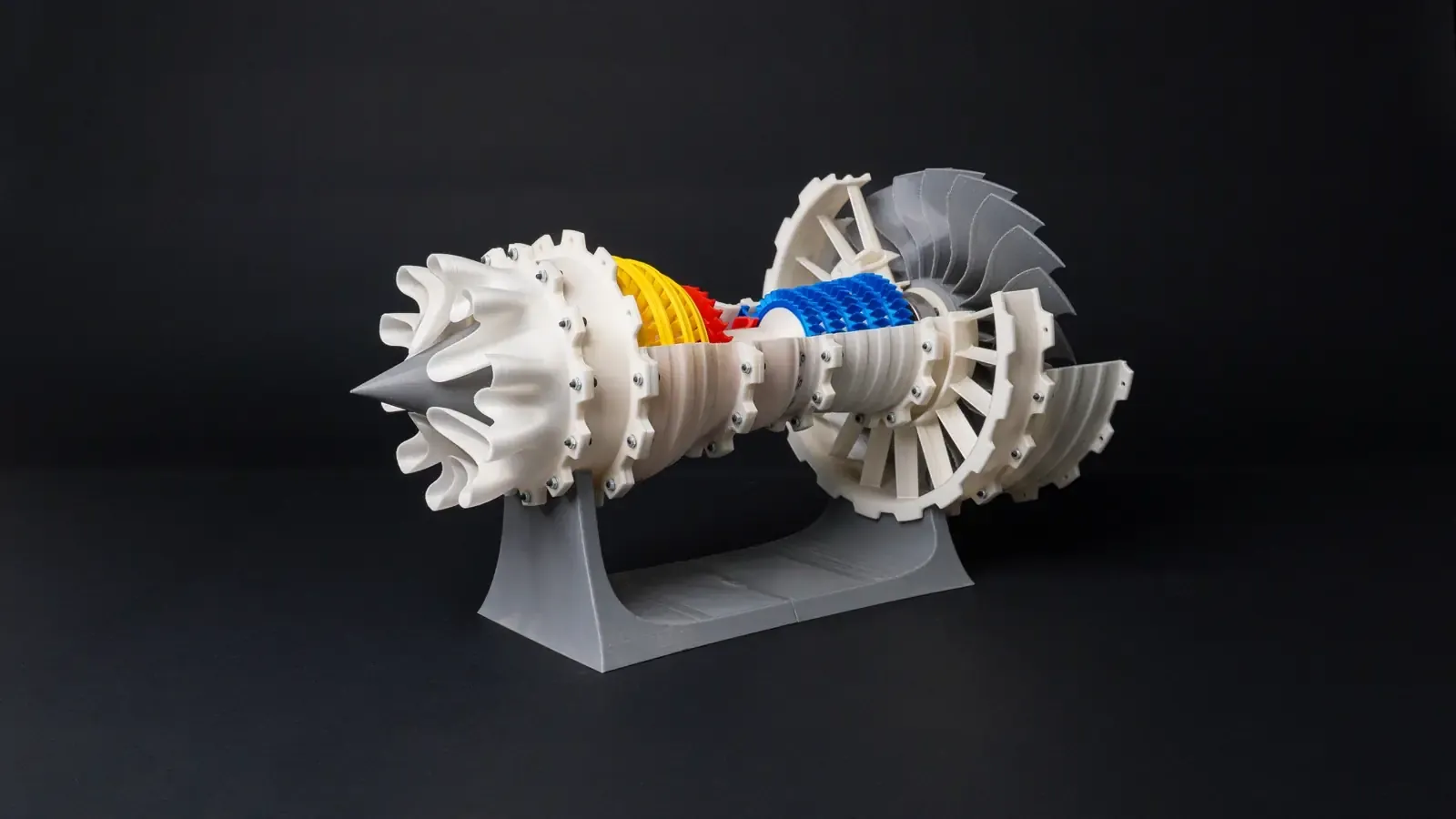
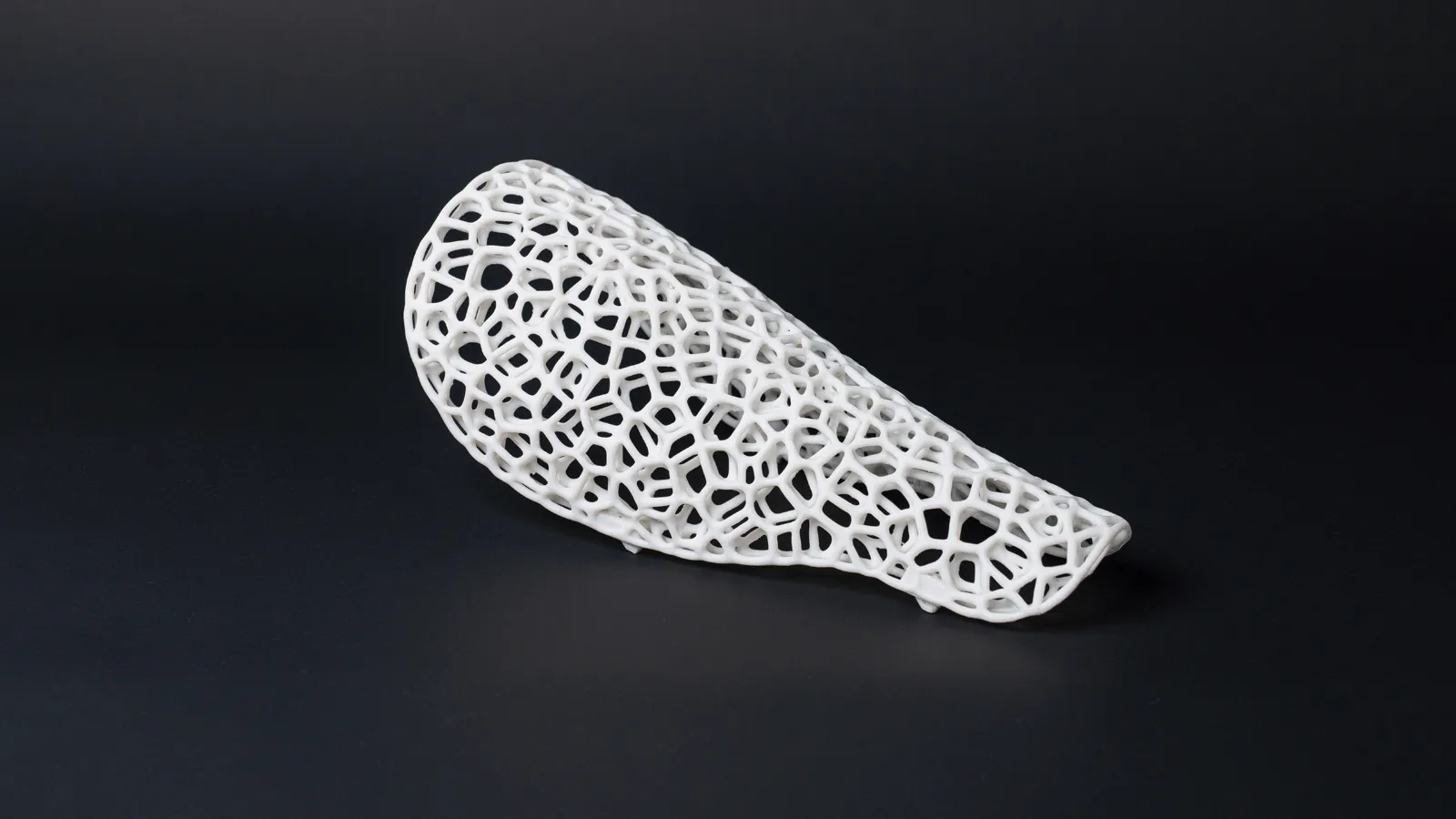
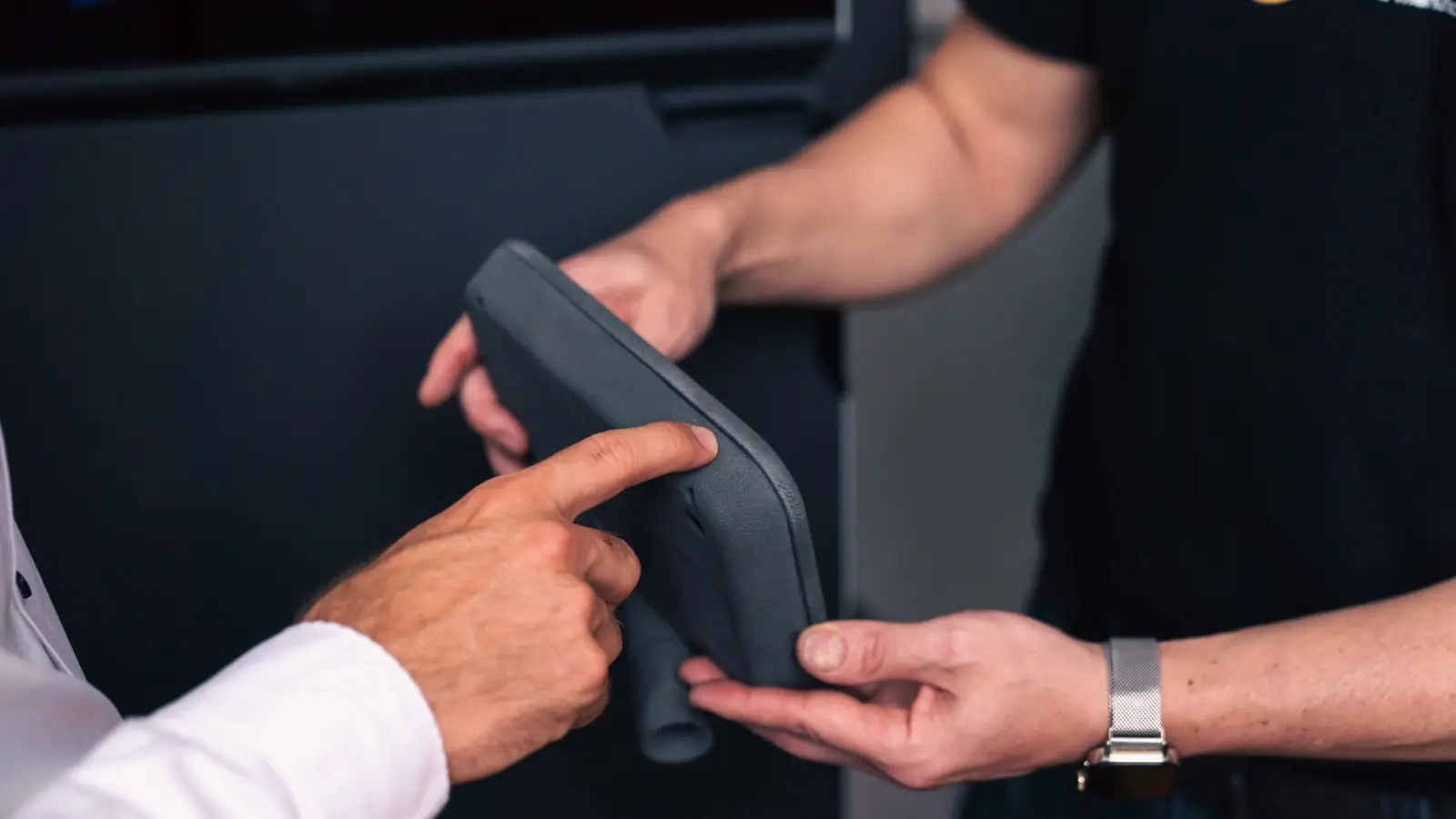
Stereolithography (SLA) is the oldest 3D printing technology and still one of the most precise. At eRobots we use it for 3D printing visual prototypes, precise housings, small components and moulds. We print on a large-format Formlabs Form 4BL printer.
SLA resins vary a lot in their properties. Besides standard rigid resins there are flexible, clear, heat resistant and antistatic ones, so SLA is not only for good-looking models.
How SLA 3D printing works
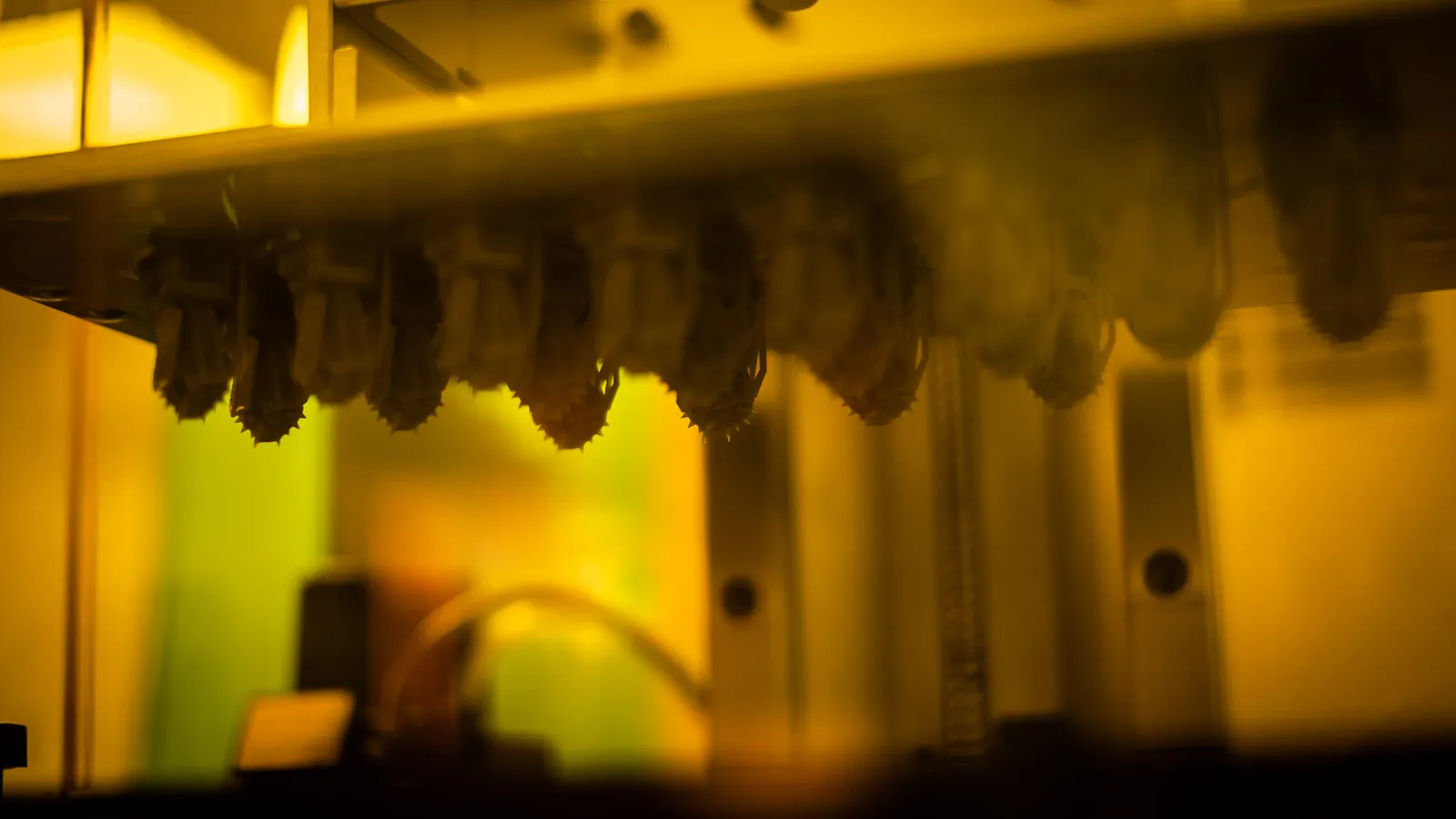
The build platform dips into a tank of liquid resin. Light from below cures a thin layer of resin exactly in the shape of the part's cross-section. The platform then rises by one layer and the process repeats. The part grows upside down, hanging from the platform.
Classic SLA printers cure the resin with a laser beam. Newer printers, including our Form 4BL, expose the whole layer at once, which makes printing much faster.
What happens after printing
The printed part is covered with leftover liquid resin. First we wash it, then remove the supports and post-cure the part with UV light. Only after post-curing does it reach its final strength and the properties listed in the data sheet.
Accuracy and detail
SLA is the technology we turn to when every detail matters.
| Parameter | Value |
|---|---|
| Printer | Formlabs Form 4BL |
| Maximum part size | 335 × 200 × 300 mm |
| Minimum layer height | 0.025 mm |
| Minimum wall thickness | from 0.2 mm |
| Surface | very fine, smooth |
| Materials | engineering and biocompatible resins |
A 0.025 mm layer is roughly a quarter of the thickness of ordinary paper, so the layers are hardly visible on the surface. Our printer is large-format, so it can also make bigger housings and prototypes in one piece.
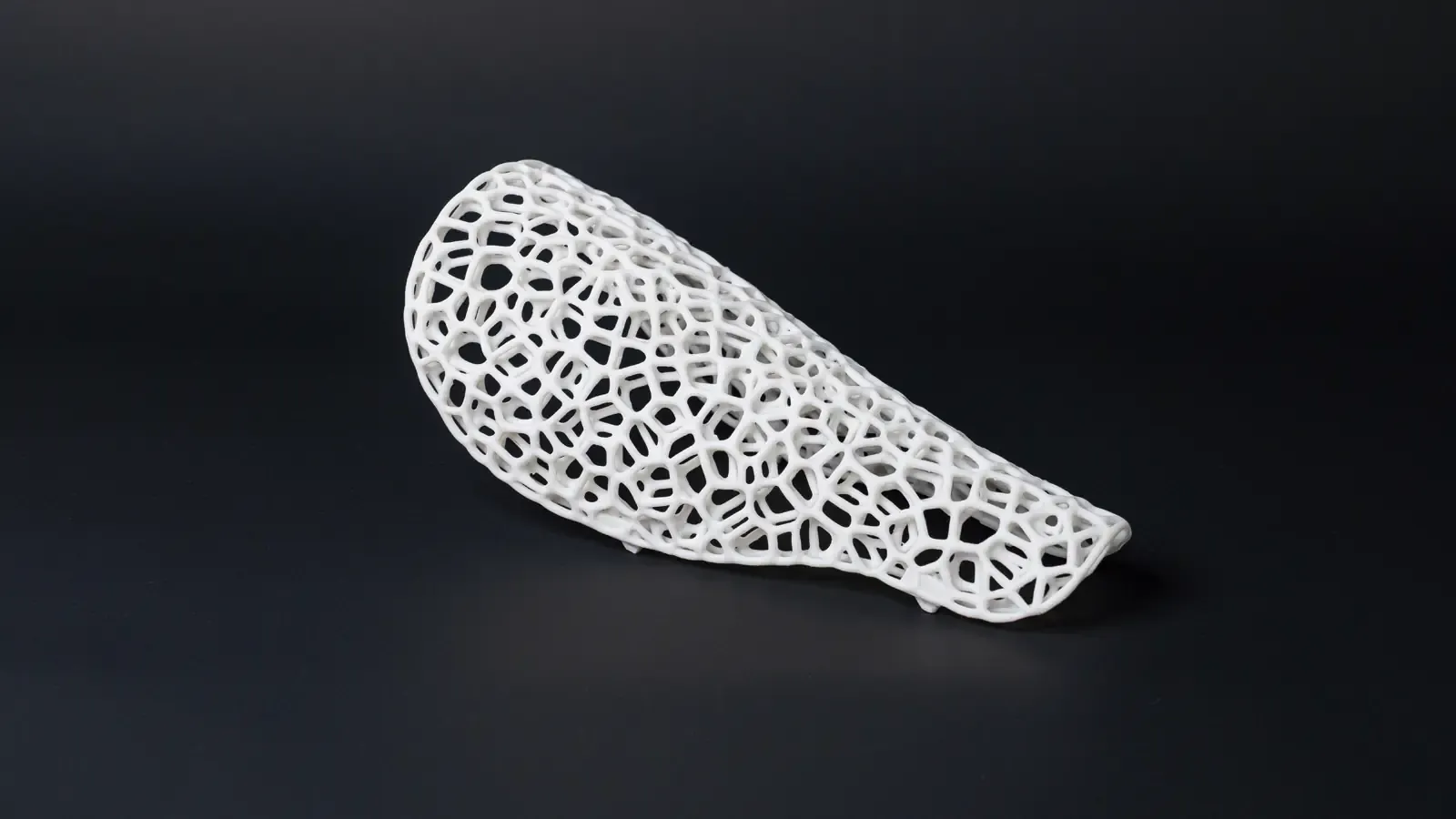
Types of SLA resins
| Resin type | Properties | Use |
|---|---|---|
| Standard (General Purpose, Draft) | smooth surface, fast printing, rigid | visual prototypes, models, shape checks |
| Rigid (Rigid 10K) | very stiff and dimensionally stable | jigs, moulds, precise parts |
| Tough (Tough 1500, Durable) | withstand bending and impact, similar to polypropylene or ABS | functional prototypes, snap fits, housings |
| Flexible (Flexible 80A, Elastic 50A) | soft and elastic like rubber | seals, soft parts, tissue models |
| Clear | transparent after finishing | light guides, covers, flow visualisation |
| Heat resistant (High Temp) | withstand high temperatures | parts near heat sources, moulds |
| Special (ESD, Flame Retardant) | antistatic or flame retardant | electronics, industrial environments |
An overview of all resins with their values is in the article on SLA resins and in our technical data sheets.
SLA as a mould for silicone castings
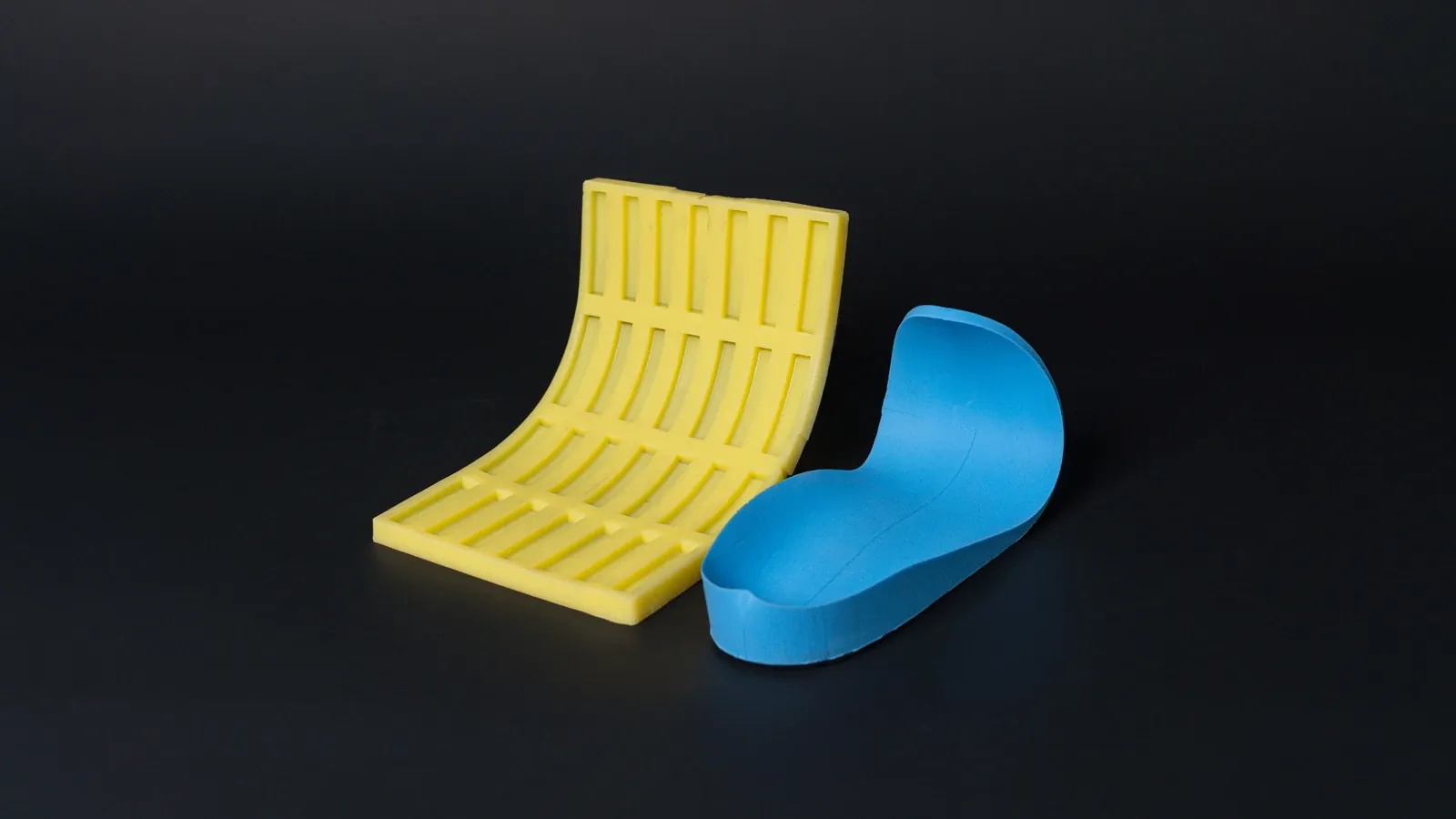
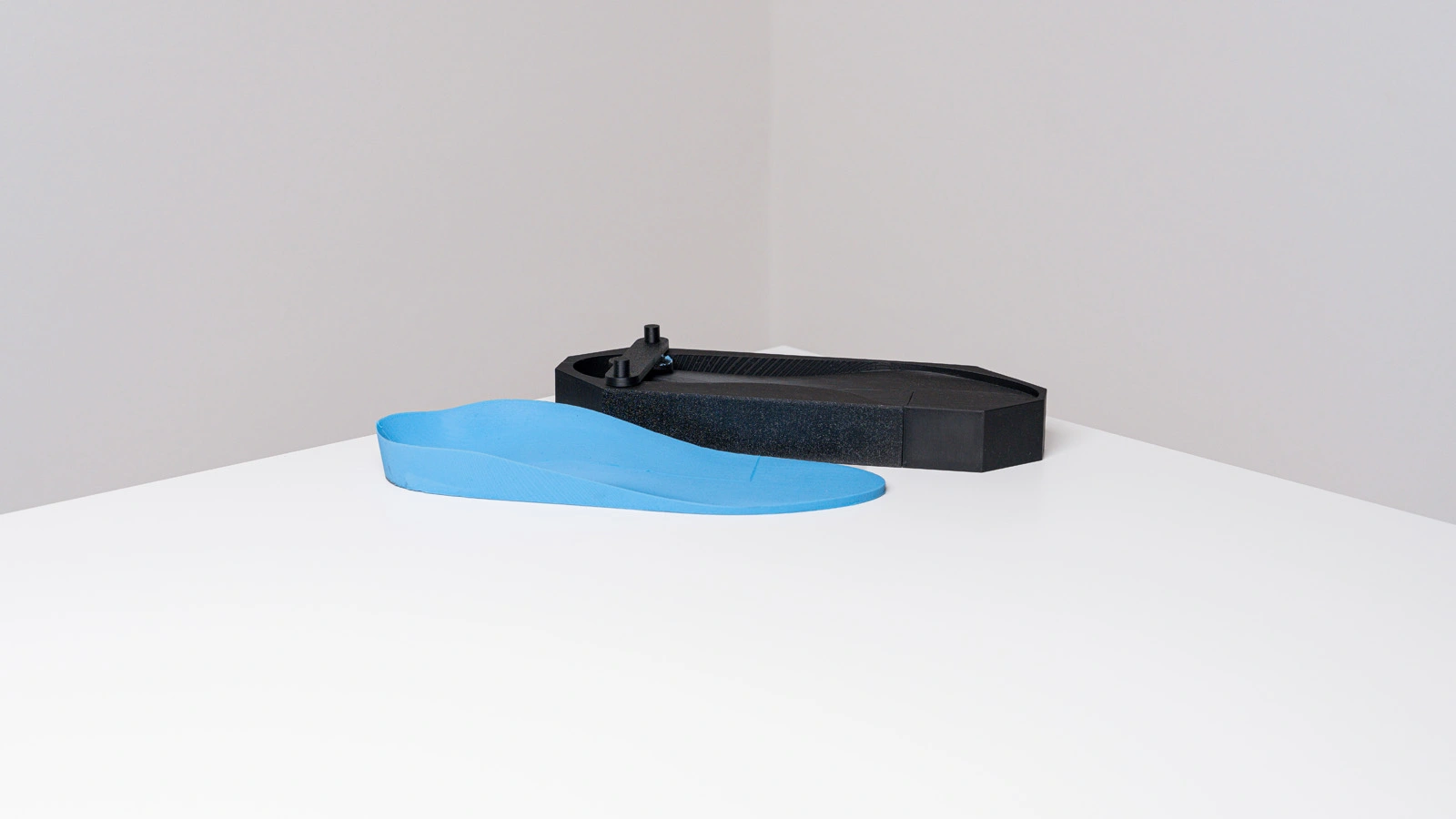
When you need a soft silicone part, such as a seal or a sole, SLA often helps to make it. We print a precise mould or master from SLA and the silicone is cast into it.
The surface of the casting copies the surface of the mould exactly. That is why the smooth SLA surface is a big advantage for silicone parts. You can read more about this service on the Silicone parts page, where we make parts with a hardness of 8 to 60 Shore A.
When to use SLA and when not to
SLA is a good choice when:
- the part must look like a finished product, for example a presentation prototype,
- you need fine details, thin walls or precise small components,
- you are making a mould, a master or a precise jig,
- you need a special material, such as clear, antistatic or flame retardant.
We recommend another technology when:
- the part will carry mechanical load for a long time, then SLS is better,
- the part will spend a long time in the sun, because some resins do not tolerate UV light,
- the part is large and price matters most, then FDM is better.
Finishing SLA parts
An SLA part needs less finishing than parts from other technologies. The only marks are left by the supports and we can sand them away. With soft resins the support marks cannot be removed completely, so we orient the part to keep them on a hidden side.
If you need a specific colour, we paint the part to RAL. Laser engraving is usually not suitable for SLA resins, so we prefer to model markings directly into the part.
Related services
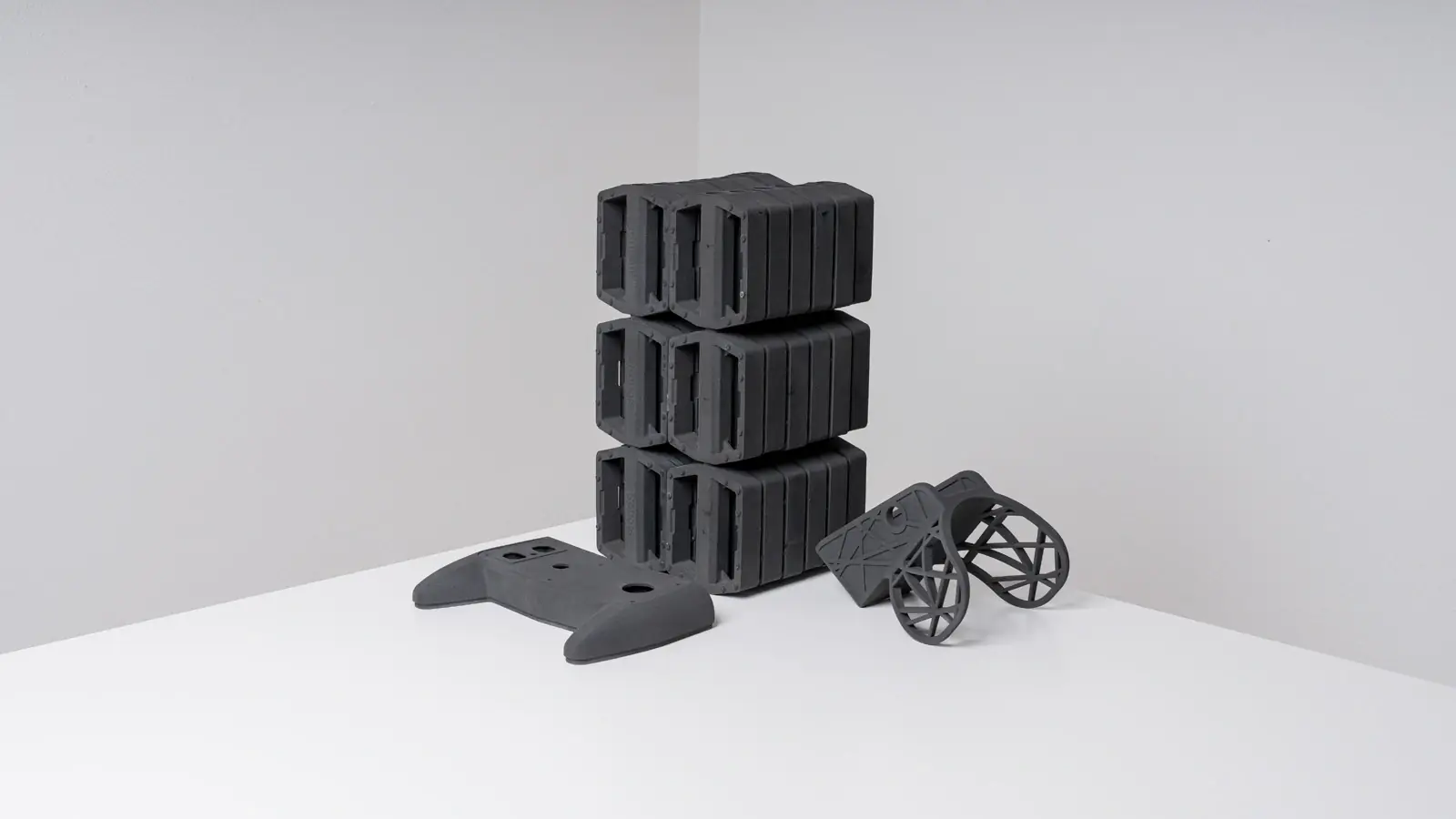
3D printing
Fast and flexible production of parts according to your ideas – from prototypes to finished components.
Silicone parts
Soft and flexible parts suitable for seals, damping or skin contact.
Surface finishing
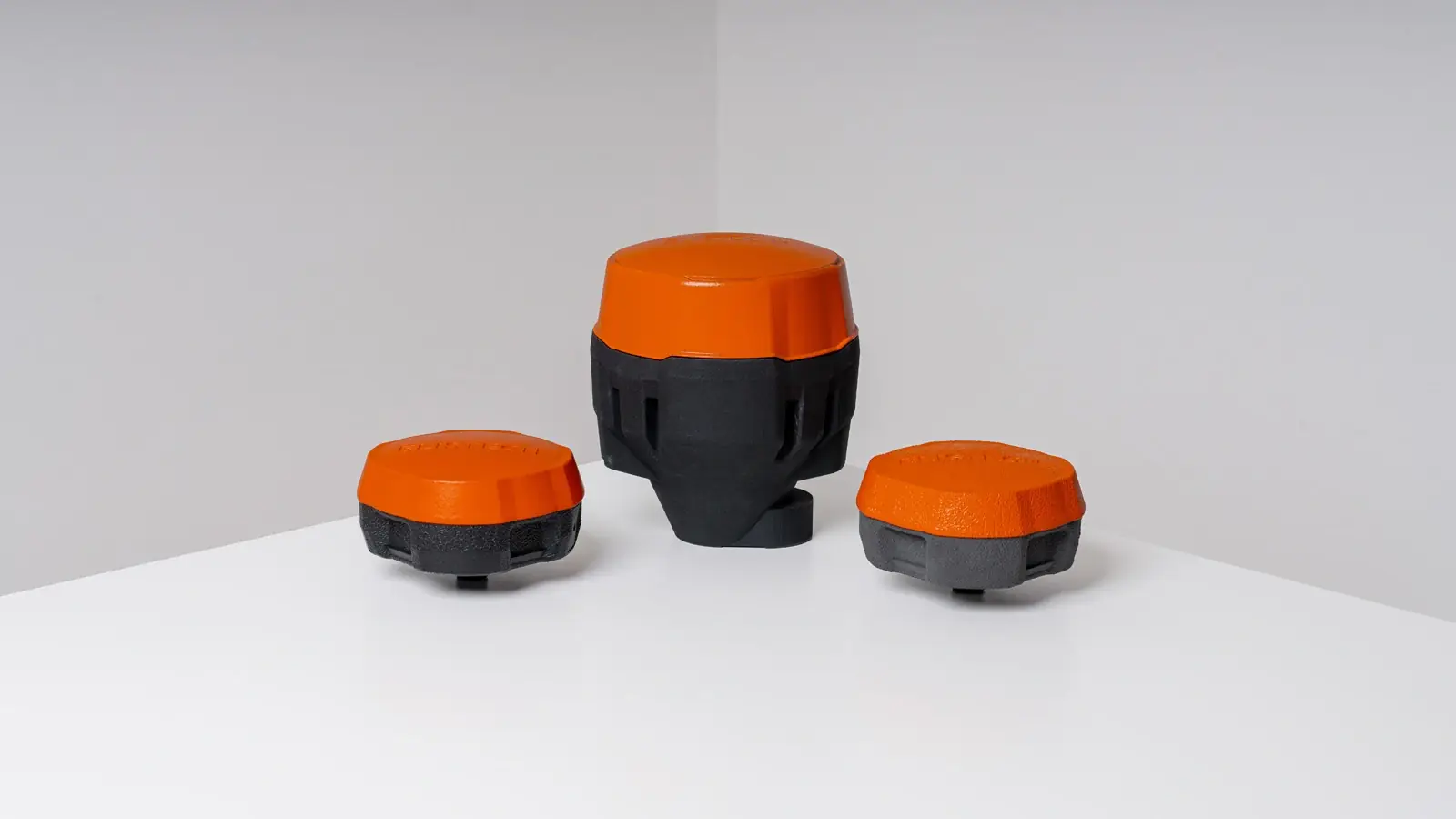
Surface finishing of parts for appearance, functionality or durability. Colouring, dyeing, texturing.
Frequently asked questions


What is the difference between SLA and DLP?
Both technologies cure resin with light. SLA originally drew each layer with a laser beam, DLP exposes the whole layer at once with a projector. The resulting parts are very similar.
Are SLA parts brittle?
Standard resins are rigid and can crack on impact. For functional parts we therefore use the tough resins Tough 1500 or Durable, which withstand bending and impact.
Can an SLA part be used outdoors?
Long exposure to sunlight does not damage most resins right away, but over time they can change colour and lose strength. For outdoor parts we recommend SLS in PA12 or FDM in ASA.
How large a part can you print?
Up to 335 × 200 × 300 mm in one piece.
How quickly can you deliver?
We complete most orders within 4 working days and within 10 calendar days at the latest.







Related articles